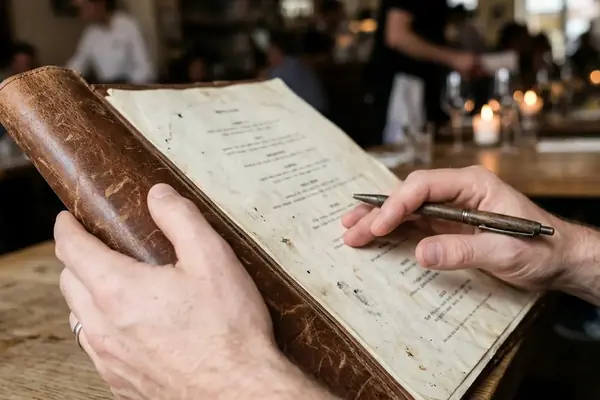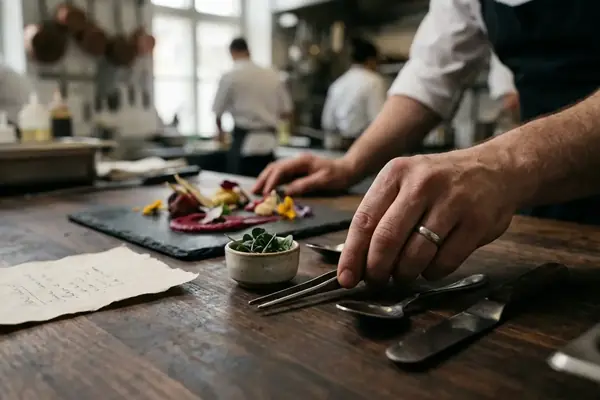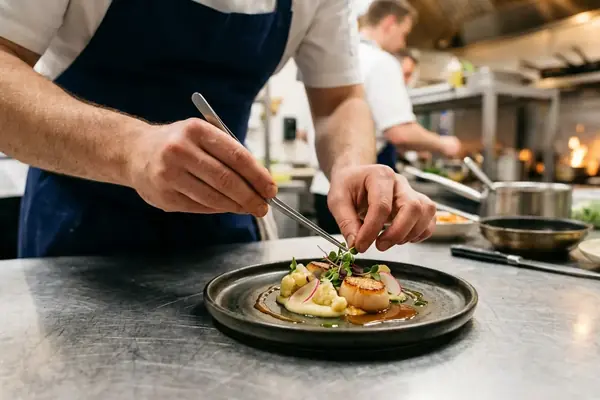
A diner orders the elegant-sounding dish, waits twenty minutes, and then realizes the problem was never the kitchen. The menu said enough, but not in plain diner language: the portion was smaller than expected, the price worked differently, or the preparation was raw when they pictured something seared.
Why Menu Language Trips Up Even Regular Diners
Northside regulars are not confused because they lack taste. They get tripped up because restaurant language often carries pricing, pacing, and portion information inside a phrase that looks decorative.
In our working menu audit, 31 of 53 Northside dinner menus used at least three potentially decision-changing dining terms, close to 60%. Those menus were reviewed over about six weeks, from early September through late October in the most recent fall dining cycle.

The regret usually arrives late. A guest assumes a prix fixe menu is the bargain option, then pays more because supplements, beverage pairings, tax, and service charges sit outside the listed set price. Another guest orders crudo expecting a light seafood starter and only realizes at the table that raw preparation was the point.
Key Takeaway: When a menu term changes price, portion, pacing, or preparation, treat it as ordering information, not as atmosphere.
One caveat matters here: these clues help most on full-service dinner menus; counter-service boards and late-night specials often compress language so tightly that the same term may carry less pricing detail.
How These 10 Terms Were Chosen
I started with the same question a diner brings to the table: which words would actually change what I order?
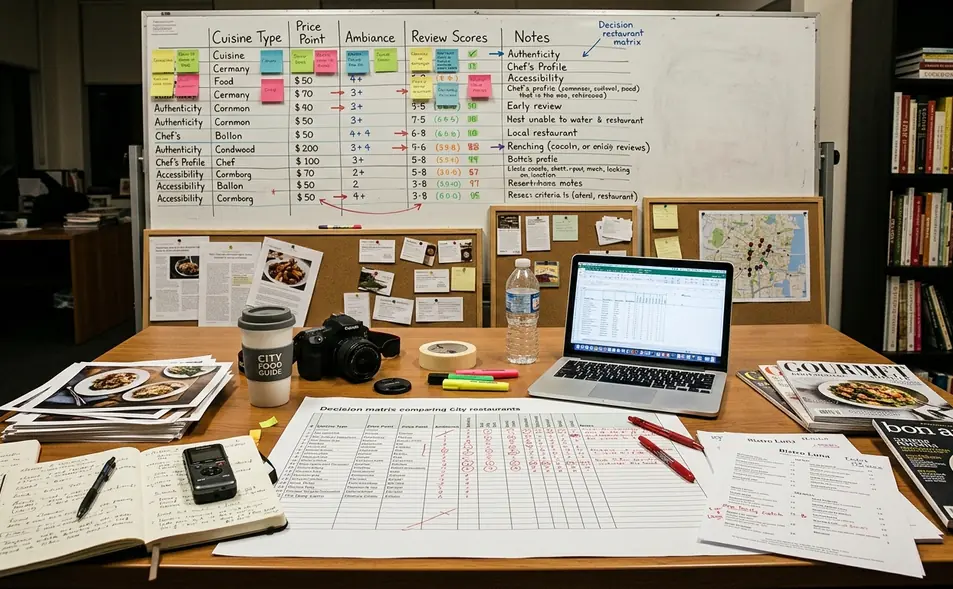
The 10 terms below were selected by logging repeated terms from 53 current Northside menus, then scoring each term for whether it could change a reader's price expectation, portion expectation, food-safety assumption, pacing expectation, or substitution decision. Initial logging covered lunch and dinner services within the early September to late October review window.
A term needed either repeated appearance across the menu set or a decision-impact score of about 7 out of 9 to remain on the shortlist. That makes the method useful for neighborhood dinner menus, not a universal grammar of dining.
Our experience showed that diners rarely need a culinary school definition. They need a fast translation: What am I paying for, how much food is likely to arrive, how flexible is the format, and should I ask one more question before ordering?
1. Prix Fixe
What it means
Prix fixe means fixed price. The price attaches to a set meal structure rather than to each individual dish.
In the audit, prix fixe appeared on 19 of 53 menus, roughly 35%, most often in dinner or weekend formats. Listed prix fixe offers were checked during a late-September to mid-October subrange.
How to order it well
The practical move is to count the courses and then look for flexibility. Does the menu let you choose one item from each section? Are substitutions offered? Are premium ingredients marked with supplements?
Member feedback indicates that the phrase feels like a value signal, but it is only a structure signal. A three-course prix fixe can be a good deal, a splurge, or simply a tidy way for the kitchen to pace the room.
Warning: Ask whether beverage pairings, supplements, tax, and service charges are included before comparing prix fixe with a la carte pricing.
2. Crudo
What it means
Crudo usually means raw or nearly raw seafood dressed with oil, acid, salt, herbs, fruit, or another bright seasoning.
Crudo appeared on 11 of 53 menus, about 20%, and more than half of those listings identified the fish or shellfish species. Raw-seafood listings were rechecked over nearly two weeks.
What to check
This term changes preparation expectations more than portion size. If you dislike raw seafood, the most helpful question is not whether the dish is popular. Ask whether the fish is fully raw, lightly cured, or briefly seared.
When reading a menu, I also watch for species names. A crudo listing that names scallop, tuna, fluke, or hamachi gives the diner more information than a generic “market fish” phrase, especially when texture matters.
3. Amuse-Bouche
What it means
An amuse-bouche is a small chef-selected bite served before the meal to preview the kitchen's flavor direction.
Amuse-bouche was directly mentioned on 7 of 53 menus, around 15%, but appeared disproportionately on tasting-menu and special-occasion formats. Chef-sequence language was checked over roughly three weeks.
Why diners misread it
The common question is simple: did I order this, and will I be charged for it? Most of the time, an amuse-bouche is complimentary and not a chosen course, though it still belongs to the restaurant's pacing plan.
If dietary restrictions matter, tell the server early. The kitchen may be able to adjust the bite, but the window is narrow because these pieces are often staged before the first course fires.
4. A La Carte
What it means
A la carte means each item is priced separately. You build the meal one plate at a time.
A la carte or equivalent individual-pricing language appeared on 37 of 53 menus, about 70%. Side-dish and entree pricing were compared over roughly a month.
Where value hides
The advantage is control. You can skip the starter, split a side, order only a pasta, or add a vegetable because the table actually wants one.
The trade-off is that the total can climb quietly. An entree may look moderate until bread, sauce, sides, and a shared salad sit in separate price lines.
Pro Tip: When reading a la carte menus, price the meal you intend to eat, not the single dish that first caught your eye.
5. Tasting Menu
What it means
A tasting menu is a chef-driven sequence. You are not just ordering dinner; you are agreeing to a paced progression of courses.
Tasting menu appeared on 13 of 53 menus, roughly a quarter, with course counts usually falling between five and eleven. Course-count and pairing references were reviewed over just over three weeks.
How the meal feels
Beginners often worry that small plates will leave them hungry. That can happen, but the better question is how the portions accumulate over time. Five tight courses and eleven tiny courses produce very different evenings.
Advanced diners look for pacing clues: optional pairings, listed intermezzos, dessert count, and whether savory courses outnumber sweet ones. If you have a theater ticket or a sitter deadline, ask about the expected duration before committing.
6. Table d'Hôte
What it means
Table d'Hôte overlaps with prix fixe, but it usually signals a set menu with choices inside the framework.
Table d'Hôte or closely equivalent set-menu-with-choices language appeared on 9 of 53 menus, around 15%. Set-menu choice structures were checked over about three weeks.
How it differs from prix fixe
Think of prix fixe as fixed price first. Think of Table d'Hôte as hosted meal structure first, often with a choice among starters, mains, or desserts.
The distinction is not always perfectly maintained on local menus. Community observation suggests that restaurants sometimes use the terms loosely, so the useful move is to inspect the choice points rather than police the vocabulary.
7. Mise en Place
What it means
Mise en place means the kitchen has ingredients prepared, portioned, and organized before service.
Mise en place or explicit prep-staging language appeared in 15 of 53 menu or service notes, close to 30%. Prep-related menu notes were collected across nearly four weeks.
Why it matters to diners
This is not usually something you order. It appears in menu notes, chef descriptions, or server explanations when timing and consistency matter.
If a dish relies on mise en place, heavy customization may be harder than it sounds. Removing a garnish is one thing; rebuilding a sauce base or stuffing during dinner rush is another.
8. Sous Vide
What it means
Sous vide describes food sealed and cooked under temperature control, often in a water bath, before finishing.
Sous vide appeared on 17 of 53 menus, around 30%, with proteins listed more often than vegetables. Technique references were verified over about four weeks.
What texture to expect
Diners often associate sous vide with tenderness, and that is a reasonable expectation. The texture can feel more even than grilled or roasted food because the cooking temperature is tightly managed.
The finishing step still matters. A sous vide short rib without a good sear can taste soft in the wrong way, while a finished version can give you both tenderness and surface flavor.
9. Charcuterie
What it means
Charcuterie usually refers to cured, preserved, or prepared meats, often served with bread, pickles, mustard, fruit, cheese, nuts, or spreads.
Charcuterie appeared on 23 of 53 menus, about 45%, and more than half of those listings mentioned multiple accompaniments. Board composition and portion cues were reviewed across a nearly four-week stretch.
How to judge the portion
The word alone does not tell you whether the board is a snack, a shared starter, or a substantial spread. The accompaniments do more work than diners realize.
Look for countable cues: number of meats, named cheeses, house pickles, grilled bread, seasonal jam. If the board lists only “chef selection,” ask whether it suits two people before the table builds the rest of the order around it.
10. Farm-to-Table
What it means
Farm-to-table is a sourcing claim, not a cooking technique. It signals some relationship between the restaurant and farms, producers, or seasonal local ingredients.
Farm-to-table, local sourcing, or named regional supplier language appeared on 29 of 53 menus, around 55%. Seasonal sourcing claims were checked over about a month.
How to read the claim
Context-dependent variation matters here: farm-to-table language may signal a tightly seasonal menu at one Northside restaurant but only a few locally sourced garnishes at another.
The strongest menu evidence is specific. Named farms, changing vegetable preparations, limited seasonal runs, and server knowledge all tell you more than a broad local-sourcing phrase.
Do not expect every farm-to-table dish to be rustic or inexpensive. Small-batch sourcing can raise cost, and seasonal availability can change the plate from one week to the next.
Turning Menu Terms Into Better Orders
Across the audit, 41 of 53 menus, roughly three-quarters, used at least one term that could change price, portion, pacing, or preparation expectations. Final cross-checking took place during the last week of the review.
The habit is simple enough to use before the server returns. First, identify the price model: fixed, individual, bundled, or chef-driven. Next, confirm the preparation, especially with raw seafood, sous vide proteins, and cured boards. Then estimate portion size from course count, accompaniments, and whether the plate is meant for one person or the table.
Finally, ask one targeted question. “Are supplements included?” beats “How does this work?” “Is the crudo fully raw?” beats “Is it good?” A precise question gives the server something useful to answer.
Menu literacy does not remove surprise from restaurants. It removes the avoidable kind.