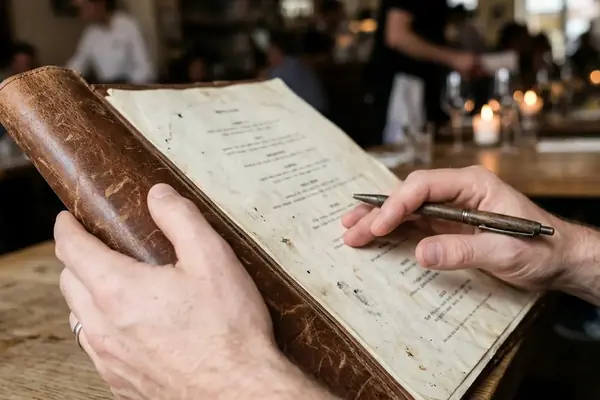
Ordering like a regular rarely starts with knowing the chef or memorizing the room. It starts with reading the menu as a working document: category, portion, method, price, and signal. Menu literacy is not a trick—it is a way to reduce the guessing before the server arrives.
I read menus as structured information systems, but the method below is meant for the table, not a spreadsheet. Use it when the menu lands, while the conversation is still loose and before everyone starts outsourcing the decision to the hungriest person.
Table of Contents
- Why Menus Still Trip Up Even Frequent Diners
- Breaking Down Menu Language and Descriptions
- Reading Prices and Value Indicators
- Understanding How Dishes Are Built on the Menu
- Catching House Specials and Kitchen Signals
- Applying These Skills on Your Next Visit
Why Menus Still Trip Up Even Frequent Diners
Common pain points at the table
The reading choice starts with friction, not appetite. Before asking what sounds good, notice where you pause. That pause may come from an unfamiliar ingredient, a vague description, an unclear portion size, or a price that feels detached from the dish around it.
Our experience showed that the useful window for this first scan usually sits between about 2 and 5 minutes after the menu lands. After that, table talk, drink orders, and server timing begin to narrow attention.
How vague descriptions create hesitation
Menus create the most hesitation when they describe mood but hide method. A dish can sound generous, bright, comforting, or bold and still tell you almost nothing about what will arrive.
Use a simple hesitation marker: if a section has several dishes—around 7 or more—using sensory adjectives but no preparation method, treat that section as higher-risk for guesswork. It is not a bad section. It just asks you to verify more.
Warning: Do not confuse a confident tone on the page with clear ordering information. A lyrical menu line can still leave the kitchen, portion, and texture unclear.
The cost of ordering without insight
The cost is not only money. It is the small disappointment of ordering a main that eats like an appetizer, picking a soft dish when you wanted crunch, or choosing the printed highlight while the better plate keeps passing by your table.
The fix is not to interrogate the menu. Start by separating uncertainty caused by unfamiliar ingredients from uncertainty caused by vague copy. The first kind may need one definition. The second kind needs a question about method, portion, or role.
Breaking Down Menu Language and Descriptions
Recognizing marketing adjectives vs factual terms
Beginner readers often try to decide whether a dish sounds appealing. A stronger first move is to sort the words into three piles: factual terms, sourcing terms, and mood-setting adjectives.
Factual terms tell you what the kitchen does. Grilled, braised, raw, and fermented stay on the page because they predict temperature, texture, and intensity. Mood words may help, but they should not carry the decision.
What 'house-made' and 'seasonal' actually signal
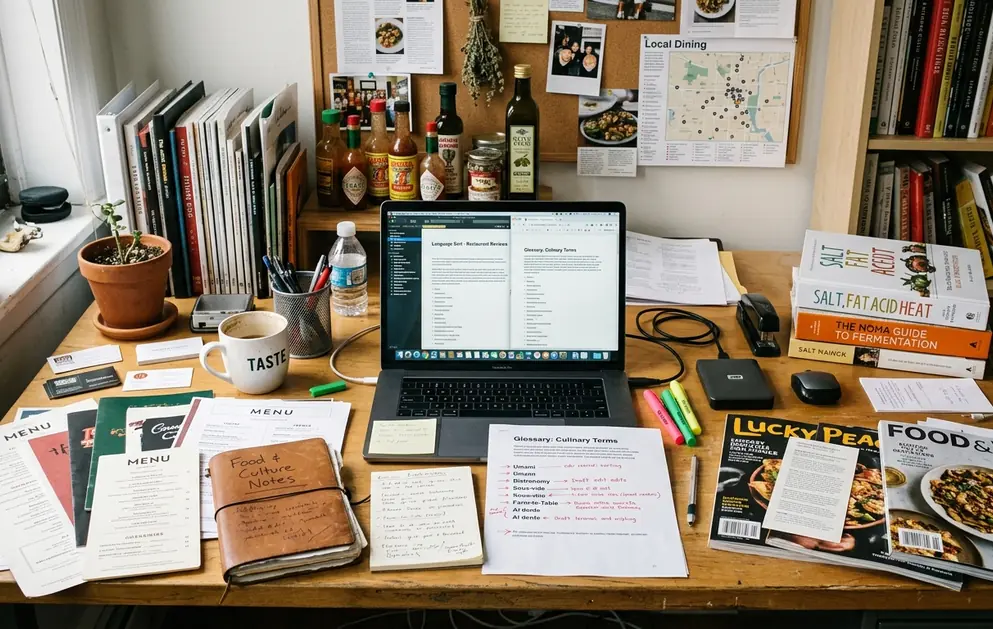
Terms such as house-made and seasonal deserve attention, but they need context. In a neighborhood diner, seasonal may mean a short purchasing window. At a small-plates wine bar, it may mean the produce is driving the plate. At a seafood counter, it may simply reflect what the buyer could land that week.
Community observation suggests that the same word can behave differently by restaurant type. Read the word, then read the room.
Spotting portion and preparation clues
During practice, a useful reliability screen was this: if close to 5 of 7 descriptive words describe technique, origin, portion, or temperature rather than mood, the menu line is likely giving practical ordering information. Run this sort during a 1 to 3 minute pass through the section you are most likely to order from.
This is where confidence builds. Once you can identify method and portion language, the menu stops feeling like a list of temptations and starts reading like a set of choices with trade-offs.
Pro Tip: If two dishes sound equally appealing, choose the one that tells you more about cooking method. It gives you a cleaner expectation before the plate arrives.
Reading Prices and Value Indicators
How price placement affects choices
Common question: should you pick by price first?
No. Price reading comes after dish decoding, not before it. If you start with price, you may treat the cheapest dish as sensible or the highest-priced dish as special without checking what the kitchen is actually doing.
The better comparison is tighter: price against protein type, labor, portion role, and nearby items in the same section.
Dollar signs and anchoring tactics
A section can contain a price anchor. When one item sits roughly $10 above the section's middle cluster, a price-anchor warning applies: treat it as a possible comparison anchor before treating it as the house favorite.
That does not mean the item is overpriced. It means you should ask what makes it different. A long braise, a larger portion, or a scarce ingredient may justify the spread. A vague adjective will not.
Matching price to expected portion and ingredients
Make the price-value comparison in the minute or two before the server's first full ordering prompt. By then, you should already know whether you are comparing snacks with snacks, mains with mains, or shared plates with shared plates.
The read is cleanest on visible à la carte menus; tasting menus, prix fixe formats, and market-price seafood boards compress normal price signals because portion, labor, and ingredient cost are bundled rather than visible line by line.
Understanding How Dishes Are Built on the Menu
Typical progression from proteins to sides
Read a dish like a construction plan: main component first, cooking method second, sauce or dressing third, then sides, crunch, acid, herbs, or heat. This approach beats reading for appetite alone because it shows how the plate is likely to eat.
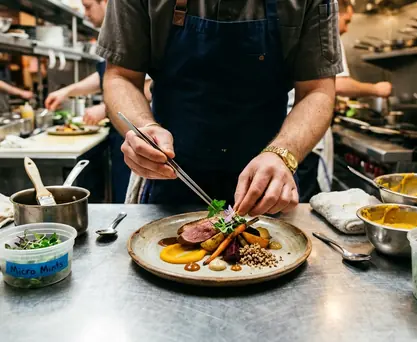
A chicken dish with roasted roots, herb sauce, pickled onions, and crisp crumbs will behave differently from grilled chicken with fries, even if both live in the same price band. One is built for contrast. The other is built for familiarity.
Flavor and texture pairing logic
Menus often reveal balance if you slow down. Fat wants acid. Soft textures often get crunch. Heat may be cooled with herbs, dairy, or raw vegetables. When the line lists those pieces, the kitchen is showing its logic.
If the line lists only the protein and a mood word, you have less to work with.
When to expect substitutions or customizations
A useful structure clue is practical: a dish line with 5 or more distinct components usually signals a composed plate rather than a simple protein-and-side order. Composed plates may allow small omissions, but they often resist broad substitutions because sauce, crunch, acid, and heat were designed to work together.
Evaluate build and substitution likelihood in a 1 to 3 minute pass after you have narrowed the section to 3 candidate dishes.
Catching House Specials and Kitchen Signals
Identifying true chef-driven items
A printed chef special can be a real kitchen priority. It can also be promotional placement. If staff cannot explain why it is special beyond repeating the menu text, keep it in the maybe pile.
The stronger signal comes from alignment: server specificity, repeated sightings on nearby tables, and a preparation detail not used elsewhere. When 3 separate cues align, the item deserves priority over a merely highlighted dish.
Daily specials versus printed highlights
Daily specials and printed highlights do different jobs. The daily special may respond to purchasing, prep capacity, or a short seasonal window. A printed highlight may be there because guests recognize it quickly.
Neither category wins automatically. Compare the printed emphasis with live restaurant behavior.
Staff behavior that reveals popular choices
Watch the room during the first 5 to 10 minutes between seating, water service, and nearby table deliveries. Notice what servers describe with detail. Notice which plates repeat. Notice whether a dish arrives with the same finishing touch each time.
Member feedback indicates that diners often feel awkward doing this, as if they are overthinking dinner. They are not. They are using the information the restaurant is already giving them.
Applying These Skills on Your Next Visit
Quick scan order before the server arrives
The repeatable system is simple: scan, shortlist, verify, then order. First scan section headers and portion clues. Then reduce the menu to 3 candidates. After that, ask one targeted question that resolves the biggest unknown.
The efficiency target is practical: reduce the menu to 3 candidates before asking the server, then use 1 question to choose among them.
Asking targeted questions without awkwardness
Good questions are narrow. Ask, Is the braised dish rich enough to share, or more of a single main? Ask, Does the seasonal vegetable plate eat warm or chilled? Ask, Which of these two has more crunch?
Those questions help the server answer from real service knowledge rather than reciting the menu.
Building a repeatable personal system
Apply the full system in a 6 to 10 minute ordering window. That fits most casual full-service pacing without making the table feel rushed.
Seven-Step Menu Decode Before You Order
- Circle the section that matches your hunger level: snack, shared plate, main, or dessert.
- Mark factual words first: grilled, braised, raw, fried, chilled, fermented, roasted.
- Treat mood words as secondary until a technique or portion clue supports them.
- Compare price only after you understand role, labor, and ingredient type.
- Read each dish as a build: main component, method, sauce, side, texture, acid, herbs, heat.
- Check whether printed emphasis matches staff specificity and nearby table evidence.
- Ask one targeted question, then order without reopening the whole menu.
Key Takeaway: The goal is not to find the single perfect dish. It is to make a better-informed choice quickly enough that dinner still feels like dinner.