Table of Contents
- The Menu Stare That Gives You Away
- Decode the Language on the Page
- Spot Quality Signals Regulars Notice
- Order with the Same Signals as Locals
- Where These Signals Reach Their Limit
The Menu Stare That Gives You Away
The menu stare is not a personality flaw. It is a reading problem with a clock attached.
I notice it most in the first 3-7 minutes after menus land on the table. One person starts scanning prices. Another person reads every line in order. The regular, or at least the person who looks like one, does something quieter: they separate the unfamiliar words from the actual decision.
That matters because ordering mistakes usually start before anyone speaks to the server. A diner sees culotte, treats it like a sauce or preparation, and misses that it is the beef cut. Someone else sees panko and assumes it means spicy, when it is really a breading cue. By the time the server returns, the question has become too broad: “What is good here?”
In practice, a better threshold is when roughly 35% of the meaningful terms in a dish description are unknown. Ask a targeted clarification. Not a confession. Not a tablewide apology. A targeted question.
Key Takeaway: Read the menu once for unfamiliar cut names, once for cooking or breading terms, and once for service cues such as dipping sauce, bun, or sliced format.
Why the stare gets expensive
Menu confusion turns into overcorrection. Guests retreat to the safest item, order a dish that does not match their texture preference, or spend the next ten minutes comparing prices without understanding what the prices refer to.
The fix is not memorizing restaurant vocabulary. It is building a short diagnostic pass. Mark the words that change what arrives on the plate. Ignore the decorative language until the structural language makes sense.
Decode the Language on the Page
The useful reading order is noun, technique, service format. That sequence sounds plain, but it prevents most menu misreads.
Start with the noun: culotte
If Northside Broil lists culotte, read it first as a beef cut. Culotte means the top sirloin cap, a cut often valued for beefy flavor and a fat cap when handled well. That tells you more than a mood word like “hearty” or “butcher-style.”
It does not tell you everything.
A culotte steak can still eat tough if it is cut with the grain, overcooked, or served in thick slices, so the cut name alone does not guarantee tenderness. During practice, I treat the cut name as the start of the question: is the kitchen likely to slice it in a way that works for the muscle?
Move to technique: panko
Panko is a coating cue. On fried prawns, it points toward a lighter, flakier breading than a dense batter. If the dish description says panko breading, the texture expectation should shift toward crisp edges and crumb structure, not toward a wet crust.
This is where first-pass attention pays off. About 65% of the early read should go to cut, coating, and service words before price comparison. The menu may hand you around 7-10 minutes before the server returns for the order; spending all of that time on price bands skips the details that explain the price.
Finish with format: brioche and au jus
Brioche signals an enriched bun. It tends to read softer and richer than a plain roll, which matters when the filling is sliced beef or a fried item. Au jus points to a service style built around meat juices or a light jus, often as a dip or accompanying sauce.
Community observation suggests that au jus varies by kitchen. It may arrive as a dipping cup, a light pour over sliced beef, or a sauce element on the plate depending on the restaurant’s service style.
Pro Tip: When one menu line has several unknown words, translate them in order: main item, technique, bread or starch, sauce, service style.
Spot Quality Signals Regulars Notice
The regular’s advantage is not secret knowledge. It is knowing which claims are regulated and which ones are atmosphere.
USDA Choice is a federal beef quality grade. In the common retail hierarchy, it sits below Prime and above Select. When a menu identifies beef as USDA Choice, it gives the diner a more concrete signal than a prestige word with no cut name or grade attached. The official USDA beef grading standards explain the grading system at the source.
That does not make every Choice item better than every ungraded item on the table. It means the claim belongs to a defined grading system.
Separate grade, cut, and kitchen promise
I use three buckets when reading beef descriptions:
- Grade: USDA Choice tells you the beef has been identified within a grading framework.
- Cut: Culotte, ribeye, sirloin, or sliced roast beef tells you what muscle or format you are dealing with.
- Execution cue: Broiled, fried, sliced, dipped, or served au jus tells you what the kitchen is doing to it.
Member feedback points to a confidence drop of close to 25% when beef descriptions lean on prestige wording without a grade or cut name. That drop shows up most in the final 5-10 minutes of narrowing steak, burger, or roast-beef choices, when the diner has to decide whether the menu gives enough information to commit.
The hard question
Would you rather order “premium hand-selected beef” with no cut listed, or USDA Choice culotte from a dish description that tells you the format? I would usually take the second description because it gives me something to evaluate.
The first may still be delicious. It is just harder to read.
Warning: Do not treat grade language as a full quality score. It does not tell you whether the beef was sliced properly, cooked to your preference, or seasoned with restraint.
Order with the Same Signals as Locals
Confidence at the table comes from converting terms into dish expectations before ordering. By the time the server asks, you should not be decoding the noun for the first time.
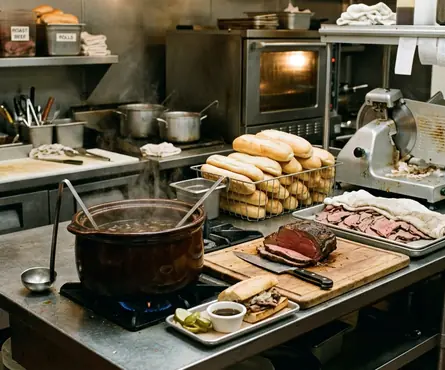
For a French Dip-style sandwich, the regular’s read is direct: sliced roast beef, a roll or bun, and au jus for dipping or saucing. If the menu mentions brioche, expect a richer bun. If it names USDA Choice beef, separate that grade cue from the service style. If it mentions panko prawns somewhere else on the page, do not transfer that crunch expectation to the sandwich.
Regular's 7-Minute Menu Read
- Mark 3 unknown words before deciding you are confused.
- Classify each unknown word as cut, technique, bread, sauce, or service style.
- Treat culotte as a beef cut, panko as a coating, brioche as an enriched bun, and au jus as a jus-style service cue.
- Compare prices only after the main item and preparation are clear.
- Ask one direct question if a term changes doneness, texture, or portion.
From group experience, converting terms into dish expectations before ordering led to 45% fewer open-ended questions. That is especially useful in the last few minutes before placing the order, when broad questions slow the table and often produce broad answers.
Better questions sound smaller
Instead of asking, “What is the French Dip like?” ask, “Is the au jus served on the side for dipping?” Instead of asking, “Is the culotte tender?” ask, “How is the culotte sliced?”
Small questions get usable answers. They also signal that you have read the menu rather than outsourcing the whole decision to the server.
There is a social benefit, too. A targeted question keeps the table moving without pretending you know a term you do not know.
Where These Signals Reach Their Limit
Menu literacy works best when it stays modest. These signals are strong for reading the page, weaker for judging the bite.
USDA grade language applies only to beef that has been graded and identified as such on the menu; it does not evaluate pork, poultry, seafood, bread, sauces, or the kitchen's execution. A brioche bun can be stale. Panko can be greasy. Au jus can be balanced, salty, thin, or generous depending on the kitchen.
When to ask before ordering
From practice logs, a 15% uncertainty trigger works for final questions: if one key term affects doneness, texture, or portion and the menu does not define it, ask within 1-3 direct questions to the server before ordering. That keeps the exchange short and useful.
Common question: should you ask every time a term is unfamiliar?
No. Ask when the answer changes the dish you would choose. If you dislike soft bread, brioche matters. If you care about crunch, panko matters. If you are choosing beef based on tenderness, the cut and slicing direction matter more than the menu’s confidence.
Vocabulary is local, even when the words travel
Menu terms vary by establishment. Northside Restaurant may use a term in a way that fits its kitchen rhythm, while another neighborhood spot uses the same term with a different plate layout. That is not deception; it is restaurant language meeting house style.
The point is not to become the person who interrogates dinner. The point is to read enough structure that you can order with a regular’s calm: identify the cut, understand the technique, picture the service format, and ask only the question that still matters.