Table of Contents
- Why the Wrong Restaurant Can Ruin the Evening
- Criteria for Selection
- 1. Dedicated Kids Menus and High Chairs
- 2. Private Dining Rooms with Adjustable Lighting
- 3. Communal Tables with Built-in Sharing Platters
- 4. Sound-Absorbing Design and Quiet Zones
- Match the Feature to the Moment
Why the Wrong Restaurant Can Ruin the Evening
I once watched a couple spend their entire anniversary dinner shouting over a bachelorette party. They had picked a highly rated spot, but they chose a venue built for high-energy groups rather than intimate conversation. A mismatched setting turns planned joy into stress—especially when occasion-specific needs are overlooked until it is too late.
Our experience showed that the strongest diner complaints usually appear after a mismatch. Parents end up waiting too long for food, or couples find themselves unable to hear each other across a tiny two-top table.
We evaluate the guest experience from about 15 minutes before the reservation time through around 45 minutes after seating. That window is when most noise, waiting, and table-fit problems become obvious. We use a 65% concern threshold for recurring complaint themes before treating a feature as occasion-critical. If a problem hits that mark, the restaurant's physical setup is usually to blame.
Criteria for Selection
Diners often start by looking at a restaurant's decor or trendy menu items. That is a beginner's trap. Better dining choices come from looking past aesthetics and focusing on friction removal.
Through ongoing work since 2019 with local hospitality boards, we narrowed our selection criteria to features that actively solve real pain points for families, dates, or groups. Decorative traits and trend-driven amenities were excluded because they do not consistently change the actual dining experience.
We require a feature to appear in at least 55% of positive occasion-specific feedback before treating it as reliably useful. We also compare this feedback across a 10- to 12-week operating window so one busy holiday weekend does not distort the recommendation.
Note that these criteria are strongest for full-service or casual-service restaurants, not counter-only venues where seating control and pacing are limited.
1. Dedicated Kids Menus and High Chairs
Generic claims about a "family-friendly atmosphere" rarely hold up under pressure. Dedicated kids menus and high chairs remain the first critical feature because they solve two immediate family problems: seating a child safely and shortening menu negotiation.
Member feedback indicates that parents experience significantly less decision fatigue when a restaurant explicitly signals it expects and welcomes children. A good family-ready venue can get child-focused items to the table within a 15-minute service target after ordering.
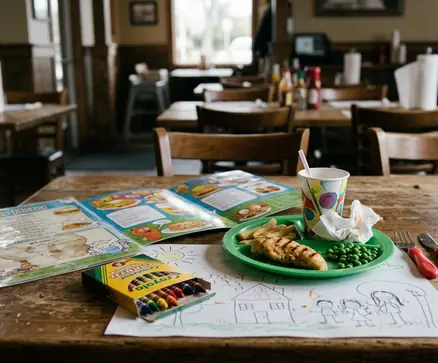
Always confirm availability during the 5:00 p.m. to 7:30 p.m. family dinner window. This is when high-chair demand and early-child meal timing overlap the most.
Pro Tip: Ask the host if the kitchen can fire the kids' meals immediately upon seating. This simple operational check tells you everything you need to know about their family service pacing.
2. Private Dining Rooms with Adjustable Lighting
Do you really need a private room for a date or a small celebration? Yes, if you want to control the mood. Private dining rooms with adjustable lighting were chosen over ordinary booths because they create intimacy without forcing you to leave the restaurant's lively atmosphere.
Curtains, corner tables, and dim general lighting were ruled out. They simply do not offer enough isolation. We look for a 70% suitability marker when private-room reservations are repeatedly linked with celebrations, date nights, or small-group satisfaction.
You must verify lighting and room separation between 6:30 p.m. and 9:00 p.m. Dinner service is loudest then, and mood control matters most.
Warning: A restaurant can advertise a private room but still disappoint a date or family meal if the room shares a speaker zone with the bar or requires a fixed banquet menu that does not fit the occasion. Always ask about audio zoning.
When a room is truly isolated, the evening has a much better chance of working.
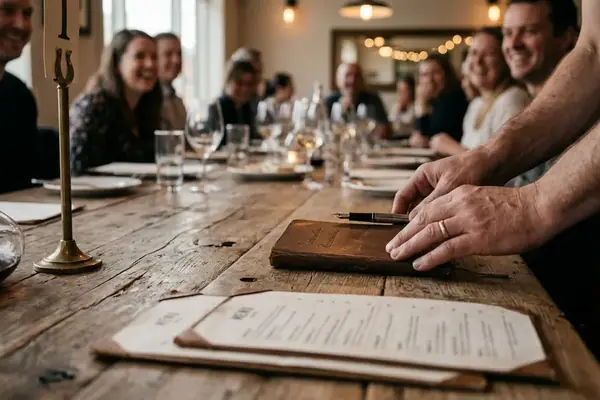
3. Communal Tables with Built-in Sharing Platters
Group meals fail when ordering becomes fragmented. They also fail when conversation stays trapped at one end of a long, narrow table. Separate two-tops pushed together rarely create the right dynamic.
Communal tables with built-in sharing platters encourage conversation across the entire group. During practice, we flag this feature for parties of 9 or more when shared-format dishes account for at least 70% of the group-ordering plan. It simplifies ordering and keeps the meal moving.
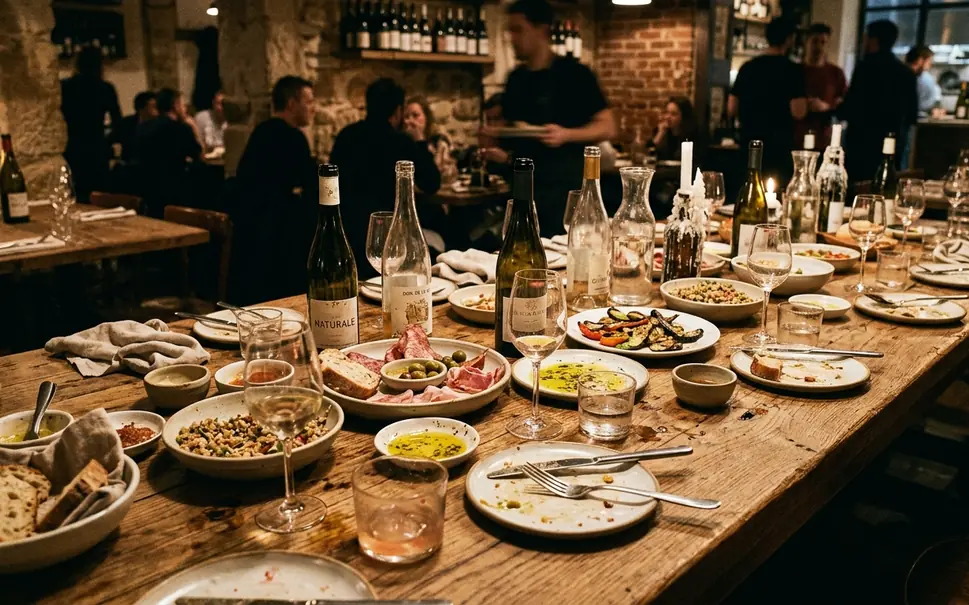
Assess the table fit during the 7:00 p.m. to 10:30 p.m. large-party dinner window. Table turns slow down during these hours, making shared serving space critical for a better group experience.
Context matters here. A communal table may improve a birthday dinner for 11 guests but weaken a business meal of the same size when guests need side conversations, note-taking space, or quieter pacing.
4. Sound-Absorbing Design and Quiet Zones
Noise directly changes whether diners can talk, manage children, or hold a date-night conversation. Music style alone was ruled out because volume and room acoustics dictate the actual experience.
Community observation suggests that venues with certified acoustical panels or dedicated quiet zones keep conversation possible at a normal volume. We use a 5- to 10-decibel reduction target between the main dining floor and the quiet zone before calling the zone meaningfully quieter.
Check sound conditions across the 6:30 p.m. to 9:00 p.m. peak conversation window. Do not rely on an empty pre-service room check. A quiet room at 4:30 p.m. tells you nothing about the roar at 7:30 p.m.
Match the Feature to the Moment
Trying to optimize everything usually leads diners to over-filter good options. A universal best-restaurant checklist was rejected for this exact reason. Prioritize one primary need rather than trying to cover every scenario.
Review the reservation notes for the listed features. Then, call or message the restaurant 24 to 48 hours before arrival. This window is close enough for staffing accuracy but early enough to adjust the booking if needed.
Use a 3-question confirmation script:
- Can you confirm the availability of the requested feature?
- Where exactly is the seating location?
- What is the expected service timing for our party size?
Add one more question only for allergies, accessibility, or children's equipment.
Key Takeaway: Pick the one feature that will prevent your specific occasion from failing, verify it during peak hours, and let the rest of the dining experience unfold naturally.