The Pressure of Picking Your First Spot
You are not choosing an abstract 'best restaurant' when you make a reservation. You are risking one evening, one appetite, and often one social impression. You book a table because of one stunning photo of a pasta dish. You arrive to find a chaotic host stand, a rushed server, and a kitchen that clearly lost its rhythm hours ago.
The pressure is real.
Our experience suggests that relying on an around 65% confidence cutoff before booking can save a lot of regret. That means at least 7 of the 11 most recent public diner comments should support the same positive pattern. Look for calm service, accurate pacing, or reliable signature dishes. Check comments posted within roughly the past 20-45 days. Then, compare them with the restaurant's current posted hours and menu before treating them as useful.
This baseline rules out three common pitfalls immediately: outdated menus, sudden chef departures, and temporary service slumps.
Define What You Want From the Evening
What is the actual goal of the meal?
The choice process should start by naming the evening's job. Is it a casual catch-up, a date, a family meal, a solo counter dinner, a celebration, or a visitor showcase? Context dictates everything. A visitor seeking a lively Northside bar counter may value energy and speed. A local planning a family birthday may prioritize seating stability, dietary range, and predictable pacing.
Once the job is named, rule out restaurants that do not fit.
Community observation suggests using an about 70% fit threshold. If 5 of 7 priority factors align, such as cuisine, budget, distance, noise tolerance, dietary range, reservation access, and meal length, the restaurant remains a candidate. Distance matters when a Tuesday night dinner requires around a forty-minute transit. Noise tolerance matters when you need to hear your dining companion across the table.
Set the decision window roughly 3-9 days before the meal for a typical first visit. Shorten it to close to 24-50 hours only for a casual weekday dinner with flexible timing.
Read the Menu Like a Local
Beginners often look for familiar dishes.
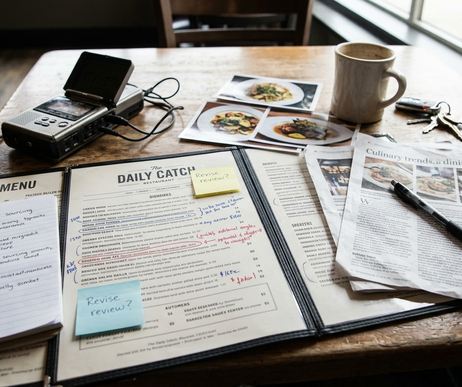
Read the menu from structure to evidence. First, identify the dishes the kitchen appears to be built around. Look for repeated ingredients, house-made components, regional cues, or a short list of mains. A kitchen built around a wood-fired hearth will naturally feature charred vegetables, smoked meats, and blistered flatbreads. That shows focus. A menu offering sushi, wood-fired pizza, and heavy French sauces on the same page shows a lack of identity.
Treat the menu as stronger evidence when around 60% or more of the mains share a coherent sourcing, technique, or regional logic rather than appearing as disconnected crowd-pleasers.
Compare the posted menu against the expected ingredient season within an about 30-75 day window. If the menu has not shifted across that span, ask whether the restaurant is seasonal in name only. Finding a strong menu means finding a kitchen that cooks with conviction.
Pro Tip: Read the current menu for signature dishes, not just familiar options.
Assess Mood and Physical Setting
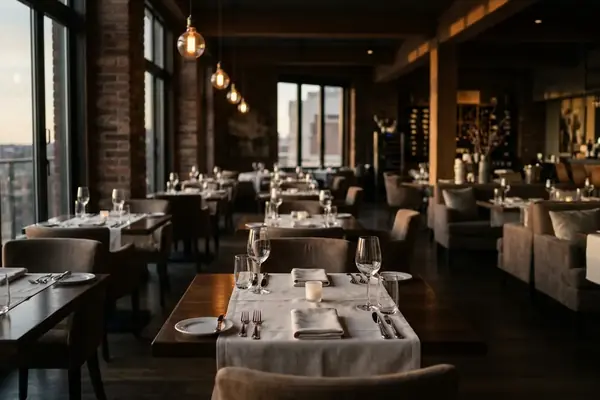
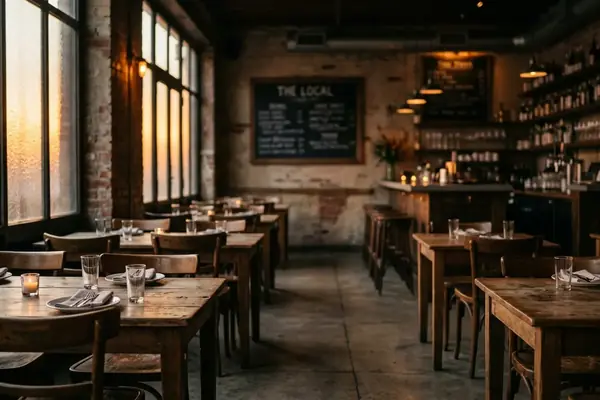
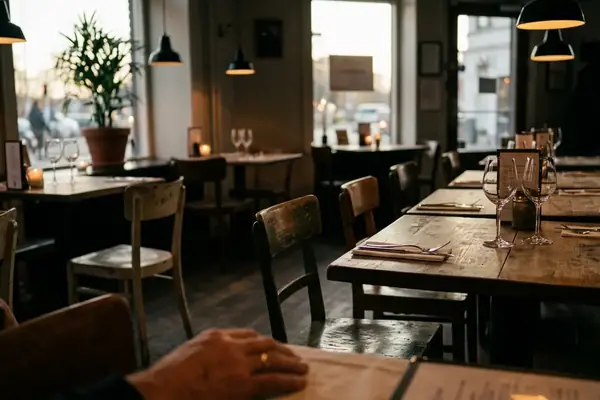
Assess atmosphere as a physical setting, not as a mood adjective.
The decision should examine noise, light, table spacing, bar traffic, door placement, and how servers move through the room. Look at the door placement. A table situated right next to a heavy glass door in December means a blast of freezing air roughly every few minutes. Watch how servers move through the room in photos or videos. If they are constantly squeezing past chairs, you will be bumped.
A restaurant with excellent food can still be the wrong first visit if the room regularly becomes too loud for conversation during the roughly 6:45-8:30 p.m. dinner band.
During practice, we found that timing matters immensely. For conversation-led meals, prefer rooms where recent diner descriptions imply normal speech is possible. Avoid spaces likely to exceed an around 70 dBA conversational comfort target during peak dinner. Assess atmosphere using evidence from the same service band you plan to visit. Friday or Saturday around 6:45-8:30 p.m. tells a different story than lunch photos or late-night bar impressions.
Warning: Do not rely on empty dining room photos taken during the day to judge evening acoustics.
Weigh Price Against Real Value
Judge price by the whole bill, not the entree line.
The process is to build a realistic order before booking. Include one starter or shared plate, one main per person, one drink or nonalcoholic alternative, tax, and tip. A thirty-dollar main course looks reasonable until you realize sides are about twelve dollars each, the mandatory service charge is around twenty percent, and a single glass of wine is roughly eighteen dollars.
Flag a value mismatch when extras raise the expected spend by around 35% or more above the visible entree-based estimate.
Build the price estimate roughly 5-10 days before the visit. Then, recheck posted menus within about 20-45 hours of the reservation for supplement, tasting-menu, or service-charge changes. Surprises on the final bill ruin the memory of a good meal.
Gauge Service Through Subtle Signals
Infer service quality from repeated small signals rather than a single glowing or angry review.
The evaluation should look for patterns. Are reservations honored close to time? Are allergies handled smoothly? A single angry review about a cold steak is an anomaly. Five reviews over three weeks mentioning that the host lost their reservation indicates a systemic failure at the front door.
Member feedback indicates you should treat service concerns as credible when around 30% or more of the most recent relevant comments mention the same operational issue. Look for long gaps after seating or confusion over reservations.
Use feedback from close to the past two to six weeks, with extra weight on the same daypart as your planned meal. Lunch service and Saturday dinner service can behave like different restaurants.
Confirm the Overall Fit Before Booking
The final decision should synthesize the evidence rather than crown a winner by score.
Keep the restaurant if it satisfies the evening's purpose, menu confidence, room comfort, value estimate, and service reliability. Book when the restaurant clears an about 85% final-fit test. That means 6 of 7 checks should be positive, with no single deal-breaker in budget, accessibility, dietary fit, or atmosphere.
Make the final confirmation around one to two days before the meal. Include hours, menu format, reservation status, cancellation terms, and transit or parking time. A great meal loses its charm if you spend roughly forty-five minutes circling the block looking for a parking spot.
This framework relies on an ongoing partnership that has tracked diner satisfaction for several years. However, the review-pattern method is weaker for brand-new dining rooms with fewer than about 10 recent public diner reports—direct menu reading and a short confirmation call carry more weight there.
A great night out requires checking the details.
Key Takeaway: Name the evening's purpose before looking at rankings, and shortlist no more than about 7 restaurants so the comparison stays practical.
First Restaurant Visit Decision Checklist
- Name the evening's purpose before looking at rankings.
- Shortlist no more than about 7 restaurants so the comparison stays practical.
- Read the current menu for signature dishes, not just familiar options.
- Check whether the room supports conversation during your specific time band.