Why Your Consistency Complaints Might Miss the Mark
Diners often treat a single disappointing plate as definitive proof that a kitchen lacks discipline. The argument starts by rejecting this easy move.
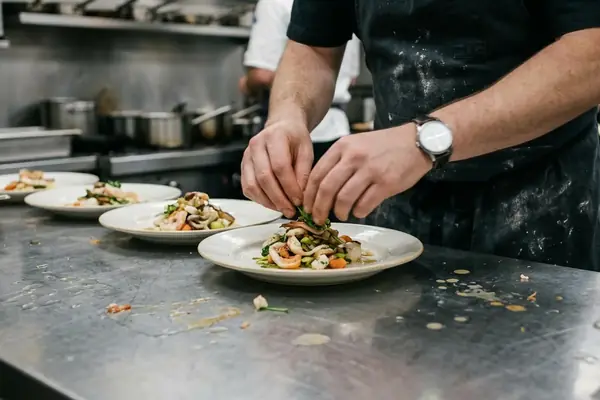
Consider a common failure case: a diner calls a restaurant inconsistent after one over-salted soup, but no comparable soup order is checked within roughly 21-49 days, so the claim has no pattern evidence. This approach ignores the normal variability of restaurant operations. It assumes a kitchen is a factory rather than a working kitchen.
Our experience showed that isolated errors rarely indicate systemic failure. Diner confidence should be treated as weak until around 55% of comparable dishes across about 3 visits show the same defect. You need a structured comparison window of 21-49 days rather than relying on one Friday-night meal to make a fair assessment of a kitchen's capabilities.
What Restaurants Can and Cannot Lock Down
A frequent question among diners is why a favorite dish changes slightly between visits. The answer requires sorting restaurant work into two categories—what management can specify and what it can only narrow.
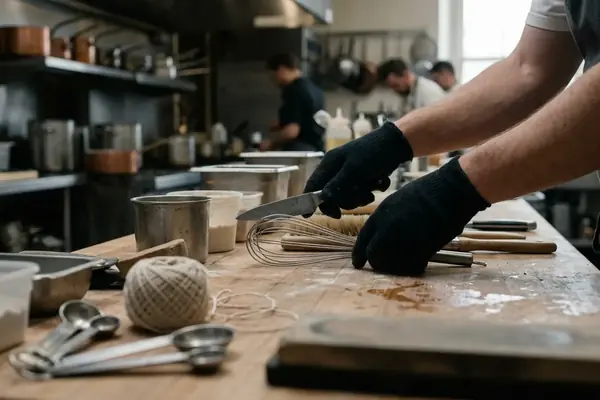
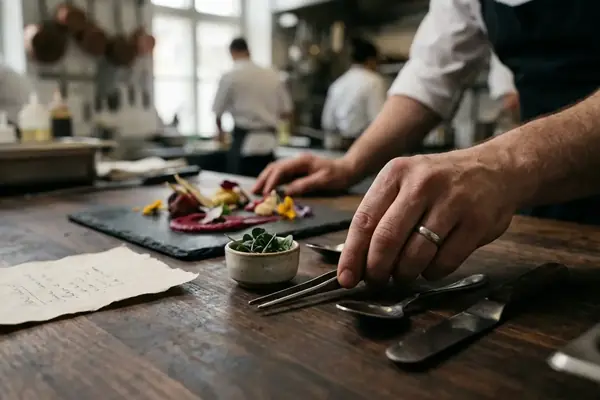
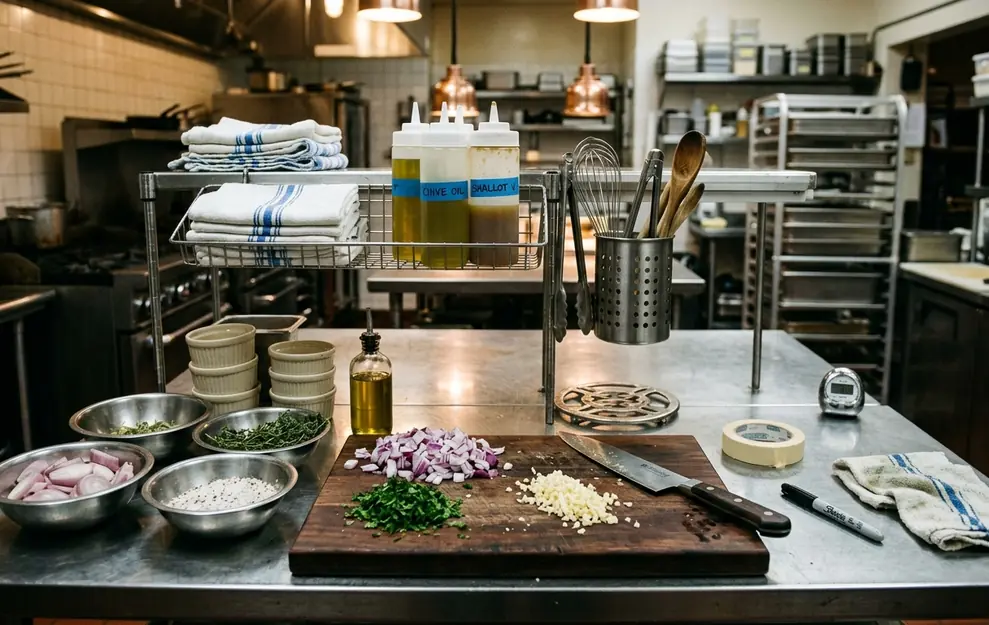
Kitchens rely on recipes, prep lists, portion scoops, station setup, hot-holding checks, and plating diagrams to build a baseline. These tools create the framework for every service.
A kitchen using prep logs, portion scales, and line checks can reasonably target close to 90% conformance on repeated components. Management builds these systems to eliminate guesswork. However, these controls should be judged across a 5-17 service window that includes prep, peak rush, and closing work.
Pro Tip: Look for structural consistency in how a dish is built rather than identical flavor profiles. If the portion size and component ratios remain steady, the kitchen's control systems are likely functioning correctly.
The Elements That Shift Every Service
I once tracked a highly rated neighborhood bistro through a busy holiday season. The exercise revealed a stark difference between intentional inconsistency and forced variation.
A sauce changed by the chef represents a deliberate pivot. A tomato lot arriving less acidic or a new line cook learning pickup timing represents forced variation.
During practice, we see how quickly external factors weaken kitchen controls. Guest-volume pressure becomes a meaningful consistency risk when covers exceed the staffed forecast by about 25% or more. Human-factor effects should be reviewed across a 3-11 shift range, especially after roughly 7 consecutive service days. Fatigue alters how a cook tastes and seasons food.
Take context-dependent variation: a salad built around seasonal stone fruit may taste brighter in one 13-day span and softer in the next 17-day span without proving poor execution. The kitchen is simply reacting to the agricultural reality of their ingredients.
Warning: Do not confuse seasonal ingredient shifts with execution failures. A guaranteed identical flavor profile year-round usually requires heavy chemical stabilization, not better cooking.
Reading a Meal With Realistic Expectations

How should a diner evaluate a restaurant fairly? The evaluation method chosen here is pattern reading, not perfection hunting.
A diner should compare like with like. You must evaluate the same dish, a similar seating time, a similar daypart, and enough repeat exposure to establish a baseline. A Tuesday lunch service operates under different constraints than a Saturday dinner rush.
Community observation suggests that true inconsistency leaves a mathematical trail. Treat a complaint as a pattern when the same execution flaw appears in around 75% of comparable orders. You must compare repeat visits within 13-39 days so ordinary menu seasonality has not fully reset the ingredient baseline.
This structured approach gives a clearer read on a restaurant's operational health. It removes the emotion from a single bad night and replaces it with a clear, observable trend.
Where Consistency Claims Reach Their Limits
The limitation section separates two operating models before making claims. High-volume operations with centralized prep face entirely different constraints than smaller kitchens that buy opportunistically.
Consistency expectations can reasonably rise when close to 85% of prep is centralized, pre-portioned, or finished before service.
For small restaurants, judge sourcing-driven shifts over a 15-57 day menu cycle rather than one reservation block. These kitchens rely on daily market availability. We track these operational metrics to understand how scale impacts precision.
Key Takeaway: A certified consistent experience at a massive chain relies on factory-level standardization. A consistent experience at a neighborhood spot relies on a chef's ability to adjust to daily variables.
This framing fits independently run or mixed-scratch kitchens more than tightly engineered, high-volume formats with centralized prep, 11-item menus, and 7-minute ticket-time targets.