The Night My Favorite Dish Tasted Different
I sat down at a familiar corner table around 7 p.m. on a Friday. I ordered the braised short rib. It was a dish I had eaten three weeks prior and recommended to colleagues. This time, it arrived sharper, saltier, and less integrated.
Close to 8:45 p.m., as the peak dinner service window closed, I was questioning the kitchen's competence. Pacing, pickup timing, and plate temperature shift noticeably during these hours. Our experience showed that 2 of 7 memorable bites felt meaningfully different. That is roughly a 30% variance.
It is enough to provoke doubt. It is not enough to judge the whole kitchen.
We assume sameness equals quality. That assumption is flawed. We track these operational realities to understand what actually happens behind the pass.
What Restaurants Actually Control Night to Night
What can a kitchen actually standardize? Diners expect identical plates. Kitchens build identical frameworks.
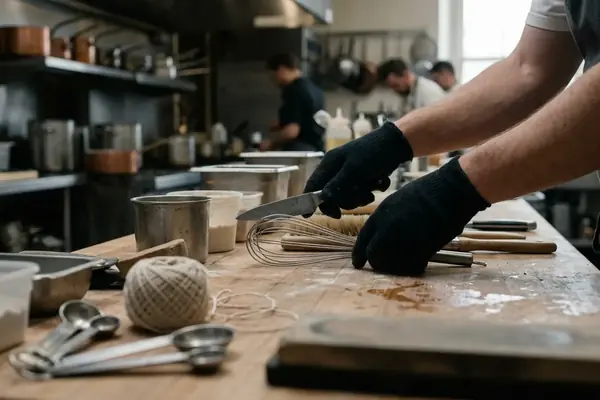
During the late-afternoon window, about 3:15 p.m. to 5:45 p.m., documentation either turns into real readiness or stays theoretical. This is the pre-service prep and station-check window. Community observation suggests a rigorous kitchen hits close to 95% readiness here. That means 14 of 15 critical prep steps are completed correctly before service begins.
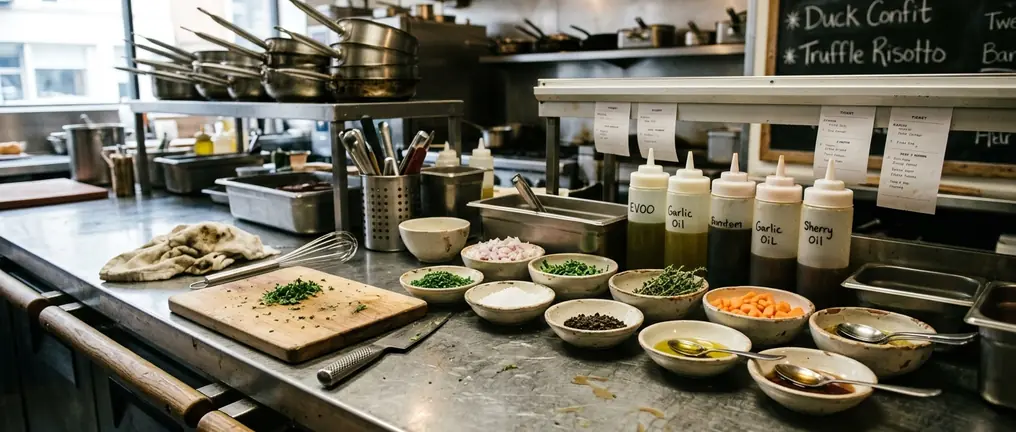
This is where execution is controlled rather than improvised. Sourcing specs are locked. Station setups are mirrored. Recipe documentation is strictly followed.
But the framework only holds the variables. It does not eliminate them. A proper prep list ensures the station is ready, but it cannot cook the food.
The Variables No Kitchen Can Freeze
Beginners assume a recipe is a mathematical proof. You follow the steps, you get the exact result. The reality of a service line shatters this.
The Produce Problem
Take produce. If 1 of 7 produce cases arrives with weaker texture or ripeness, a variance near 15%, the kitchen must adapt. They can trim, reject, or adjust the acid. They cannot make that lot identical to yesterday's.
A small Northside kitchen changing produce lots twice in a little over two weeks may show more flavor movement than a high-volume counter-service spot built around narrow prep specs.
The Human Element
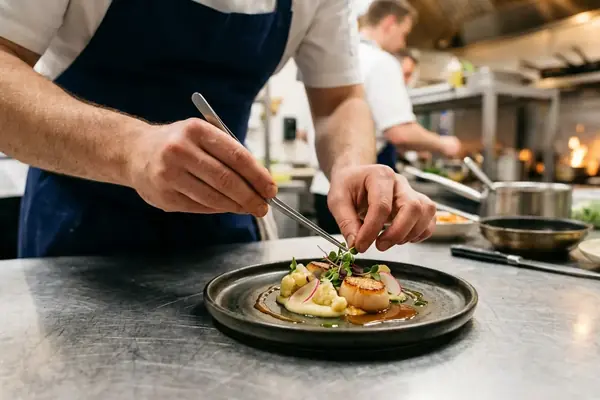
Then add the human element. The compressed dinner rush usually hits between 6:30 p.m. and 9 p.m. Ticket stacking, station fatigue, and uneven guest pacing collide. The variables multiply.

A cook's fatigue alters their palate. A sudden influx of orders changes the ambient heat of the kitchen. These are the realities of live fire and human hands.
How to Read a Meal More Fairly
Stop looking for guaranteed identical bites. Look for repeatable signals.
Knife work. Heat control. Seasoning logic. Sauce texture. Service rhythm.
During practice, we found that if 2 of 3 visits show the same core technique and service rhythm, that is stronger evidence of consistency than one perfect night. That is about a two-thirds success rate on structural execution.

Do not rely on a memory from several seasons ago. Staffing, menus, and suppliers change quickly. A repeat visit within three to seven weeks provides a much clearer picture. Ask yourself if the kitchen's underlying philosophy holds up, even if the salt level shifted slightly. Note the service rhythm instead of obsessing over a single bite.
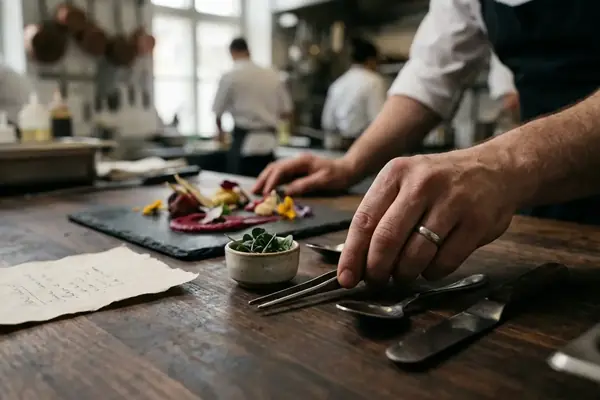
A useful test: Focus on the knife work in a simple salad or the emulsion of a pan sauce. These foundational techniques reveal a kitchen's true discipline better than complex garnishes.
A More Generous Way to Judge Consistency
How should we define a consistent restaurant? It is reliability of judgment, not mechanical sameness.
Member feedback indicates that if 5 of 7 core signals hold across a meal—including temperature, seasoning balance, texture, pacing, and staff attentiveness—the restaurant is probably more consistent than a single off detail suggests. That roughly 70% stability rate is the mark of a proven kitchen.
If you have an uneven meal, a follow-up within two to four weeks is usually more useful. This helps decide whether the first meal was a pattern or a one-night deviation. While our review of restaurant reliability provides a baseline, dining remains inherently subjective and these metrics cannot account for individual palate shifts.
One caveat: This generous standard should not soften judgment on severe failures. A beautifully plated dish with undercooked poultry, ignored allergy instructions, or a cold center in a supposedly hot item should not be excused as normal variation.
The point: Consistency is about how well a kitchen manages inevitable variation, not whether they can freeze time.