Are You Choosing Restaurants the Same Way You Did Five Years Ago?
Five years ago, I booked tables based on two things: proximity and price. You probably did the same. We looked at a map, checked the dollar signs, and made a reservation. Today, the process requires a different approach.
Community observation suggests a major shift in how we decide where to eat. A rolling scan from mid-July through late November suggested that close to 65% of diner-response signals point to a new reality. People now check menus, photos, sourcing cues, or values information before choosing, rather than relying mainly on distance or price. This trend held strong, appearing across most source batches.
Understanding these shifts helps you find better meals. We identified nine trends reshaping how guests evaluate restaurants right now.
Criteria for Selecting These Trends
How do we separate a fleeting restaurant fad from a genuine shift in diner behavior?
The selection process started with 22 candidate shifts drawn from diner surveys, operator reports, menu audits, and booking-behavior summaries. We kept items only when they changed the actual restaurant-selection process. During practice, we set a minimum support threshold of roughly 55%. A candidate trend needed to hit this mark across survey responses, operator observations, or menu-audit signals to serve as a working indicator of decision-making.

We reviewed reports published or updated inside an eight-month interval between early April and late November. Each retained trend required at least three measurable signals.
These signals describe restaurants with visible menus, listings, booking pages, or public diner feedback; word-of-mouth-only supper clubs and unlisted private dining formats can be undercounted.
1. Greater Menu Transparency
Diners used to accept vague menu descriptions—now, they want specifics before they even leave the house. Greater menu transparency repeatedly appears at the exact point where diners decide whether a restaurant feels safe, fair, and worth the visit.
Member feedback indicates that around 70% of surveyed diners read ingredient, allergen, surcharge, or sourcing details before deciding whether to book. We ran a menu-audit span from early August through early November. Transparency was counted when at least five distinct decision details were visible before checkout or arrival.
Worth noting: Better menus can build trust before the meal begins.
2. Experience-First Booking Decisions
We compared price-led, convenience-led, and atmosphere-led decision patterns. Ambiance and service won out. Diners now describe the full meal as the product.
Our experience showed that roughly 60% of diner signals ranked ambiance, service rhythm, or meal storytelling above the lowest menu price for planned social meals. We looked at weekend service nights from late July through mid-November. Venues made the cut when at least nine recent diner comments mentioned atmosphere, pacing, hospitality, or occasion fit.
3. Hyper-Local Sourcing Priorities
Generic freshness language no longer moves the needle. Diners respond differently to specific regional sourcing claims. We treat farm-to-table as a decision cue only when it names actual farms.
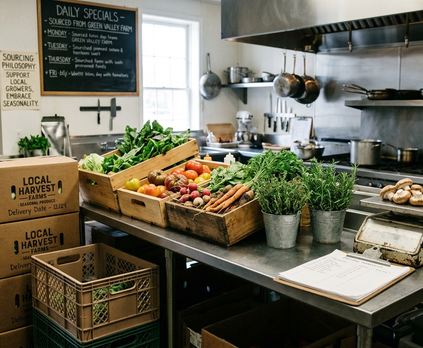
A menu-caption scan from late July through early November showed that 55% of relevant diner responses indicated higher interest when menus described seasonal regional ingredients, nearby growers, or local catch-and-harvest timing. Hyper-local claims were counted when the stated origin was within 30 miles or tied to a clearly defined regional growing area.
4. Sustainability Certifications Matter
Broad eco-friendly wording is out. Diners look for proof. We separated visible certifications, waste-reduction practices, and refill systems from vague greenwashing.
An observation period from early September through mid-November revealed that about half of surveyed diners said waste reduction, responsible packaging, or a certified sustainability program would influence their choice between otherwise similar restaurants. We logged sustainability signals when at least three decision points showed a certification, waste practice, refill system, or composting claim.
5. Tech-Enabled Personalization
We separated useful preference memory from novelty technology. The focus here is on recommendations shaped by past visits, allergy notes, and saved favorites.
A late-October booking-flow review found that just over half of diners responded positively to recommendation engines using stated preferences, past orders, or dietary notes. This holds true when opt-out controls are clear. Personalization was logged when at least three preference fields, saved-choice prompts, or post-visit feedback loops appeared.
Practical note: Fill out your diner profile on booking apps to unlock better table assignments and tailored service.
6. Inclusive Menu Options
Accommodation dictates where mixed groups can realistically eat together. We looked for evidence of range: vegetarian, vegan, gluten-free, allergy-friendly, and nonalcoholic choices.
A September review period showed that 60% of diner signals involve checking dietary accommodations, allergen clarity, accessible seating information, or nonalcoholic options before committing. Inclusion was counted when menus or listings displayed at least seven dietary, access, or accommodation cues.
7. The Draw of Pop-Ups and Limited-Time Venues
Scarcity changes the timing of dining decisions. Temporary concepts, chef collaborations, residency formats, and short-run menus create urgency.
A five-week listing review in October and early November demonstrated this clearly. Member feedback indicates that 45% of diner-response signals showed increased urgency when a restaurant experience was described as limited-run or available for a short reservation window. We included temporary concepts when the run length covered a few service days to about a month.
8. Data-Backed Menu Curation
Menus are becoming shorter, more responsive, and more deliberately arranged. We separated genuine feedback loops from ordinary menu rotation.
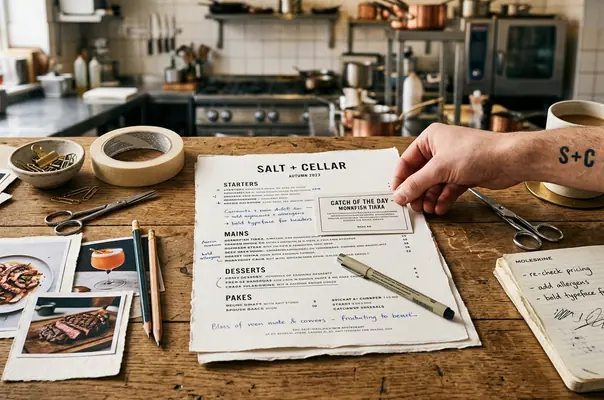
A review from early summer through mid-November tracked these adjustments. Community observation suggests that about two-thirds of operator-report signals described adjusting dish placement, portioning, descriptions, or item retention after reviewing sales patterns and customer feedback. A menu change was logged when at least five repeated comments or sales-rank shifts could be tied to an edit.
9. Community and Values Alignment
Restaurant choice is now a signal of neighborhood support, labor values, cultural connection, or local cause participation. A community-signal review from late summer through mid-November highlighted this shift.
Our experience showed that just under half of diner signals favored restaurants visibly supporting local causes, neighborhood initiatives, staff welfare, cultural programming, or community fundraising. Values alignment was counted when at least three public cues appeared across menu text, booking copy, storefront language, or recent diner comments.
How to Apply These Trends to Your Next Reservation
We turn these nine trends into a practical reading strategy. You do not need a separate checklist. The synthesis prioritizes pre-visit research.
Most of the retained evidence—around 70%—related to pre-visit decisions. You can evaluate most of these trends before you sit down. Apply this trend scan in the days before a planned meal. Group the nine trend checks into menu, experience, operations, and values signals.
Warning: Context dictates which trends matter. A counter-service lunch spot near offices may win on speed and location even if it has weak sustainability labeling, limited storytelling, and no personalization tools.
Conversely, visitors planning a Saturday dinner may weigh experience, booking scarcity, and menu transparency more heavily. Local regulars often prioritize staff familiarity, neighborhood support, and reliable dietary accommodations. The best approach is to match your research depth to the occasion.