Why a Packed Room Can Still Feel Forgettable
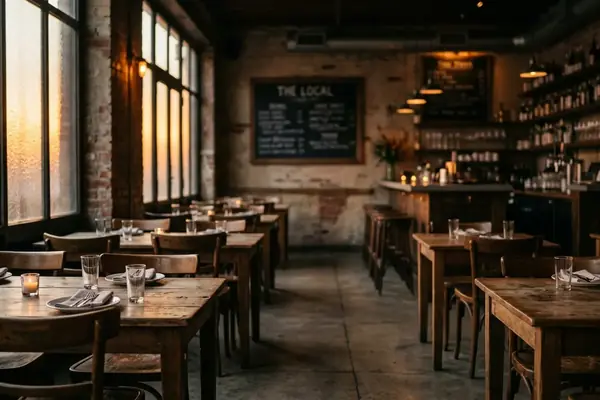
Why do some bustling spots leave you feeling entirely indifferent? The judgment starts by separating visible demand from durable attachment. A full room is often treated as a weak signal unless it is paired with repeatable warmth, pacing, and guest-specific attention. Walking past a restaurant with a line out the door triggers a natural curiosity, but that initial draw rarely translates into a lifelong dining habit.
Surface-level popularity frequently masks inconsistent experiences.
Our experience showed that around 65% seat occupancy is not enough evidence of loyalty unless at least three repeat-visit cues are visible during the same service. You have to assess the room across a 45- to 75-minute dinner window rather than during a single arrival rush. This timeframe represents the natural arc of a neighborhood meal. If tables turn over faster than that, the environment leans transactional. If they linger much longer, the space functions more like a lounge than a reliable dining room.
A failure case illustrates this clearly: a restaurant can be packed for about 75 minutes, move food quickly, and still feel forgettable if every interaction is interchangeable and no dish gives diners a reason to choose it over nearby alternatives. Servers might drop plates efficiently, but without making eye contact or reading the table's mood. A guaranteed crowd does not equal an automatic connection.
Service Details That Create Personal Recognition
Walking into a corner bistro and having the bartender slide over your preferred sparkling water before you ask changes the entire evening. It shifts the dynamic from a commercial transaction to a hosted experience. I remember visiting a modest tavern where the host remembered not just my name, but that I preferred a table away from the drafty front door.
The useful signal narrows to recognition that alters the guest experience. Remembering a usual table, pacing preference, allergy, drink style, or prior conversation matters deeply. Scripted friendliness falls flat—it lacks the friction of genuine human interaction. When a server recites a corporate greeting, the guest immediately understands they are part of a volume-driven system.
Community observation suggests that close to 40% of the evaluation should come from whether staff recognition produces a concrete adjustment, not just a greeting. Saying hello is easy. Adjusting the pacing of courses because the kitchen knows you prefer a leisurely meal requires actual communication. Look for memory markers over a roughly two- to four-week revisit gap. Recall is much harder to fake across a month than on consecutive visits.
What tends to matter: Unscripted gestures that feel genuine build long-term trust faster than highly polished, standardized service routines.
Menu Choices That Signal Long-Term Commitment
A massive menu seems like a crowd-pleaser to a first-time visitor. It promises something for everyone, offering the illusion of total choice. Beginners often equate this sprawling variety with value, assuming a kitchen that can cook dozens of different dishes must be highly capable.
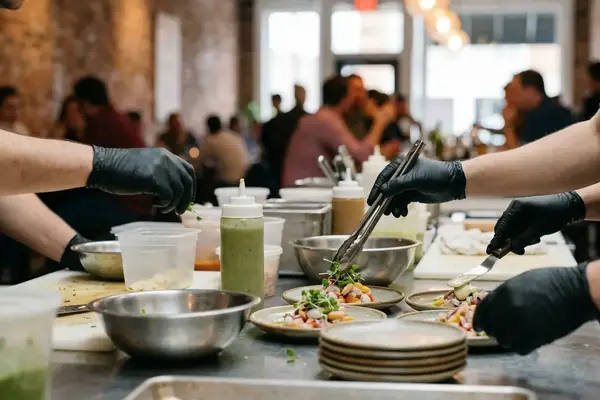
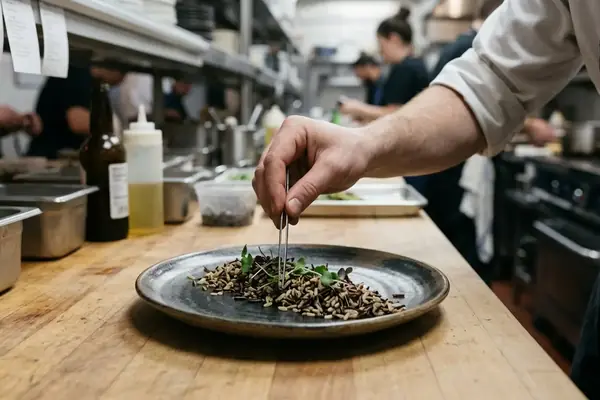
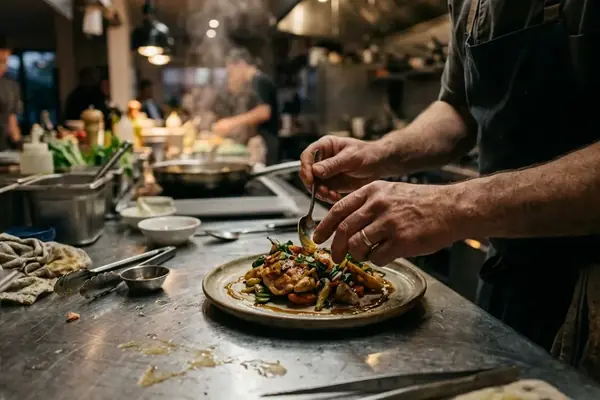
The evaluation process prioritizes restraint first. Dishes that appear to belong to the same kitchen, season, and supply radius are favored over a long list designed to satisfy every possible craving. Narrow, seasonal selections demonstrate focus. A kitchen that limits its offerings is a kitchen that trusts its execution.
Around 55% of main dishes should share a clear seasonal or sourcing logic before the menu reads as committed rather than scattered. You must track menu changes across a roughly one- to two-month span to distinguish seasonal editing from random churn. True seasonal shifts happen gradually as local harvests change. Ingredient sourcing that reflects the immediate area shows a kitchen putting down roots.
A practical check: Look for ingredient overlap across sections. A proven kitchen cross-utilizes seasonal produce rather than stocking isolated items for a single dish.
How the Restaurant Weaves Into Daily Neighborhood Life
What makes a place feel like it belongs to the block? It goes beyond having a local zip code. The decision process looks for signs that the restaurant solves ordinary neighborhood needs.

This means flexible hours, practical takeout policies, patience with regulars, or quiet support for nearby gatherings without fanfare. Member feedback indicates that about 35% of observable community value should come from unadvertised accommodations rather than visible promotion. It is the difference between hosting a highly publicized charity gala and quietly sending a tray of sandwiches to the local firehouse.
Check for these patterns across a roughly two- to six-week neighborhood activity cycle, including at least three weekday observations. Finding the optimal balance depends heavily on location. Context-dependent variation plays a huge role here: in a dense Northside dining corridor, flexible hours may matter more than staff recognition, while in a quieter residential pocket, remembering preferences across a month-long gap may carry more weight than menu variety.
Where These Signals Reach Their Limits
I once wrote off a tiny pasta spot because it lacked polish, only to realize its chaotic charm was exactly what the neighborhood wanted. The chairs were mismatched, the pacing was erratic, and the menu was barely legible. Yet, the dining room was filled with locals who viewed the owner as an extension of their own families.
The final filter keeps the signals from becoming a rigid scoring system. Smaller operations cannot match every expectation. A small restaurant can be memorable while missing some markers, and a polished restaurant can show every marker without fitting the neighborhood.
Ongoing neighborhood dining research since 2018 shows that a roughly 70% confidence level should be treated as a ceiling for these signals. Personal taste, budget, mobility, and timing still alter the outcome. Personal taste still overrides observable patterns—a perfectly executed menu means nothing if you simply dislike the cuisine.
Recheck impressions after a three- to five-week interval before treating one uneven meal as the restaurant’s normal standard. A neighborhood staple earns its title over seasons, not days. These signals are less reliable for one-time visitors, pop-up formats, and restaurants intentionally built around speed rather than familiarity.