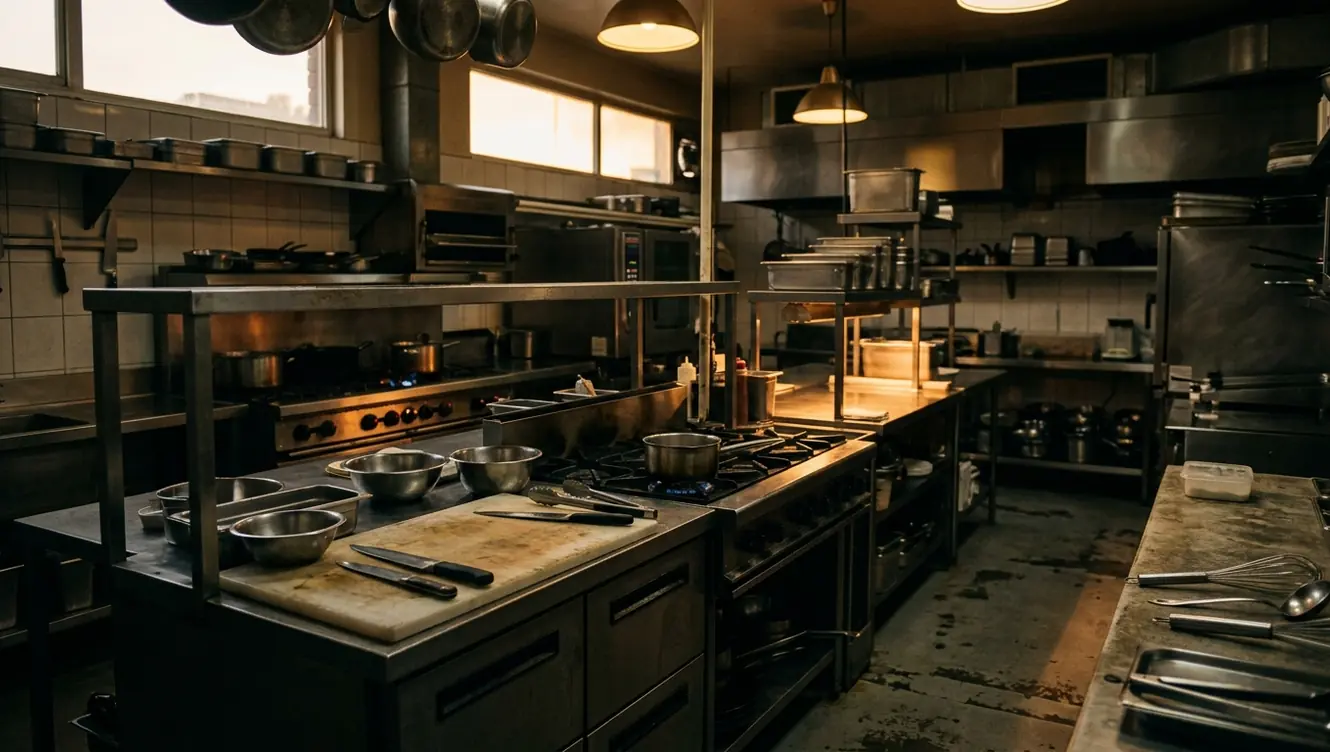
The Second the Menu Lands on the Table
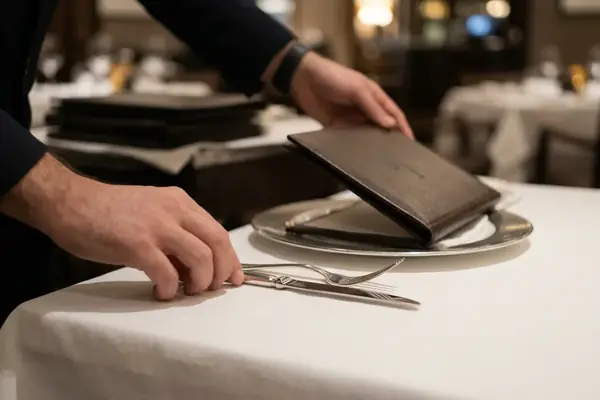
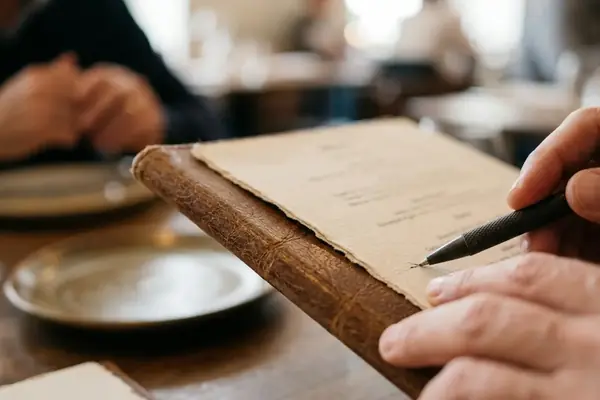
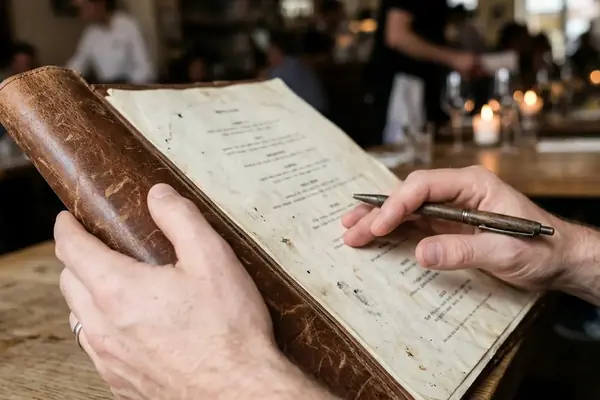
A server sets down a single-page menu and a chalk specials board at a busy Northside two-top. The diner immediately begins scanning prices and recognizable dish names. This opening scan relies heavily on visible evidence. Guests count the number of dishes in each section, look for named cooking methods, spot repeated ingredients, and check whether sides or sauces receive their own descriptions.
Observation of dining room pacing indicates a useful first read takes 60 to 90 seconds before the server returns for drinks or opening questions. During that brief window, many diners miss the quieter signals of where the kitchen actually spends its skill. Certain sections of a menu act like a talent map if you know how to read them.
Why Menus Quietly Rank a Kitchen’s Priorities
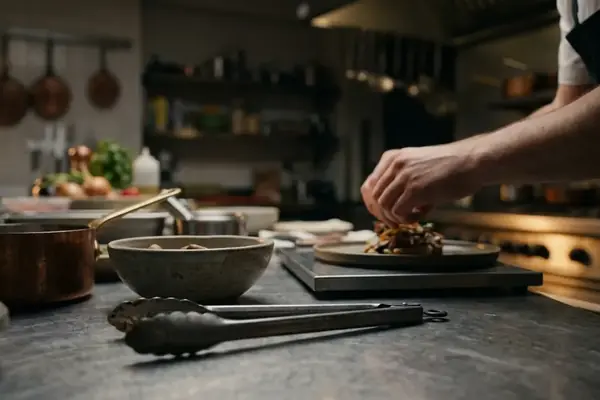
Menus operate as highly specific operating plans. They reflect prep labor, station skill, and what the kitchen is willing to stand behind nightly. Dishes requiring stock, pastry, live-fire cooking, or repeated pan finishing point directly to prep labor and station capability. Tightly grouped methods suggest deliberate organization.
Structural clues provide a clearer picture than flashy dish names. Separate cold and hot starters, sauces derived from a shared stock, vegetables assigned distinct cooking methods, and desserts identified as made in-house all demonstrate depth of technique. Printed menus may remain unchanged for several weeks or a full season—while verbal additions and chalkboard items can change within a single service. Reading these eight sections offers practical tools for evaluating consistency under volume.
1. The Appetizer List: Ambition Without the Safety Net
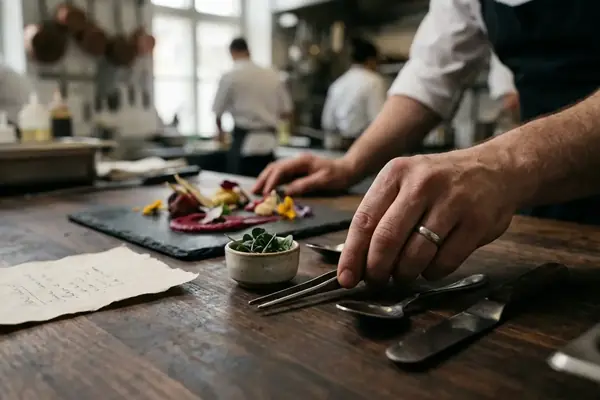
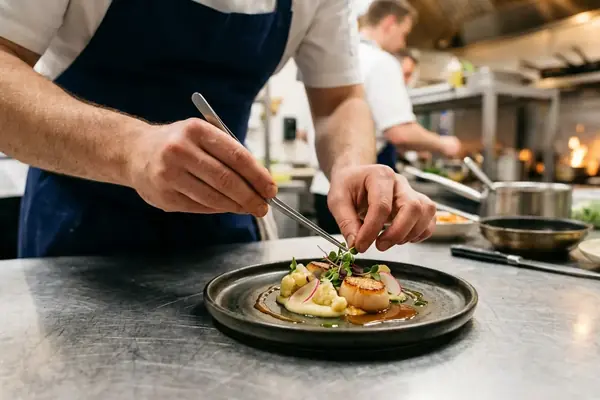
A focused appetizer section separates starters by the work they demand. Raw or cured items expose knife work and temperature control. Fried items expose oil management. Small composed plates expose seasoning because they lack the rich, heavy sauces that often mask errors on main courses.
Operational tells live in the details. Evenly cut garnishes, cold components served genuinely cold, and acid or herbs added at the final pass show a disciplined line. Many fried starters need to move from fryer to table within roughly 3 to 6 minutes. Longer waits make steam-softened crusts and cooling centers much easier to detect. Focused, cookable starters demonstrate confidence, whereas overloaded shareable boards often hide weak technique under sheer volume.
2. Soups, Stocks, and Broths: The Patience Test
The soup section requires a clear base and a distinct reason to be on the menu that day. A broth with separately prepared garnish, a bisque with controlled texture, or a stew suited to current weather indicates a kitchen that respects its prep schedule. Stocks commonly require multiple stages. Cooks must roast or sweat aromatics, simmer, strain, cool, store, and reheat the liquid without scorching or muddying the flavor.
A light vegetable stock may develop in 45 to 90 minutes. Poultry or roasted-bone preparations can occupy 3 to 8 hours before cooling and storage. A thoughtful soup section signals strong prep culture even when mains look conventional.
Caveat: restaurants built around raw bars, grills, bakeries, or very small kitchens may omit soup because it does not fit their equipment or service model; absence alone says less than a poorly handled soup.
3. Vegetables and Sides: Where Skill Has Nowhere to Hide
6. The Specials Board: Tonight’s Real Resume
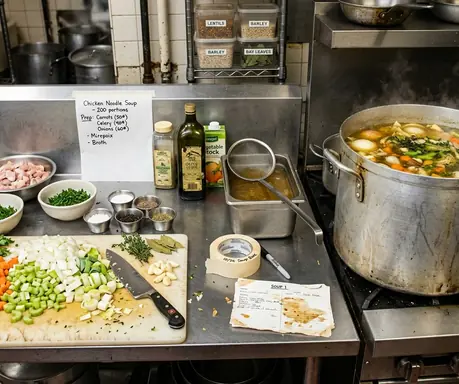
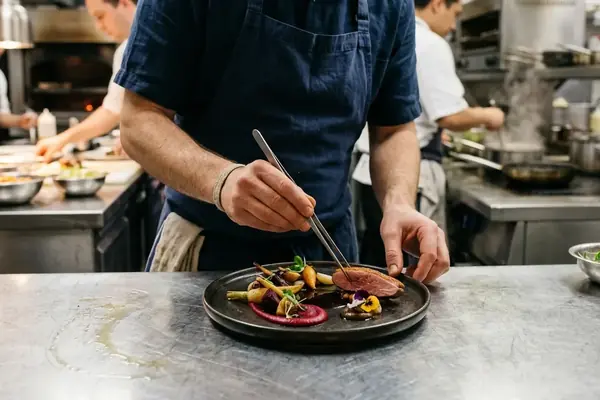
Ordering one side as a diagnostic plate reveals whether the kitchen treats it as a finished dish. Distinct char, retained bite, a measured glaze, fresh herbs, acid, and a crisp element show respect for produce. Useful menu language names an actual treatment. Look for wood-roasted carrots, braised greens, embered cabbage, or potatoes finished with herb butter.
Diagnostic Side Dishes
Timing dictates vegetable success. Fast-cooking greens may need only 2 to 5 minutes on heat, while roasted roots often require 25 to 50 minutes plus final seasoning during service. A kitchen proud of its vegetable work invests talent well beyond the center-of-plate steak.
4. Pasta, Rice, and Grain Foundations: Craft Under Repetition
Pasta, rice, and grains are evaluated by how the base and sauce are joined. Achieving the optimal texture requires the kitchen to portion consistently, control doneness, reserve or generate enough starch, and finish with stock, fat, cheese, or acid. A pan-finished pasta should show sauce clinging to the noodles rather than pooling beneath them. Risotto-style rice should arrive cohesive but still move on the plate.
Across multiple seasons, cooking times still fall into broad windows. Fresh pasta may cook in 1 to 4 minutes. Dried pasta often needs 7 to 13 minutes, and pan finishing can add another 1 to 3 minutes during active service. These dishes punish sloppy stations on busy nights. A serious list here serves as a strong confidence signal.
5. The Main Protein Block: Range Versus Focus
The main-course block shows how a kitchen balances ambition with what it can execute at volume. If several dishes rely on the same grill, oven, braise program, or sauce base, that concentration identifies the kitchen's likely strengths. Coherent range and clear cooking methods outperform a menu attempting to master every protein style at once.
Plausible method language includes pan-roasted fish, slow-braised shoulder, wood-fired chicken, or grilled chop. Each term identifies an observable cooking path. A thin fish fillet may be cooked and rested within 6 to 12 minutes. Braised cuts are commonly prepared over 2 to 5 hours and reheated or glazed to order.
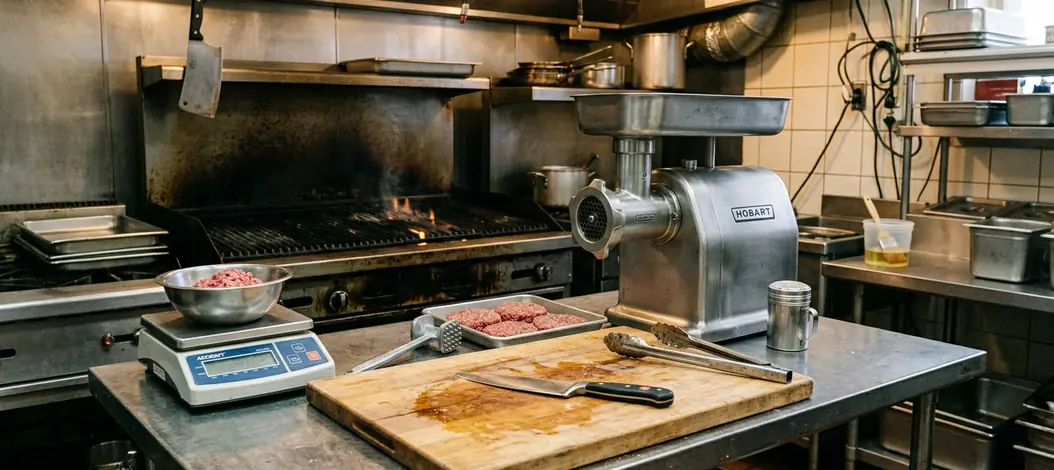
Guests typically read the chalkboard after the permanent page, then ask the server what arrived or changed that day. Strong boards are specific, limited, and tied to season or market finds. Credible details include a named cut, species, cooking method, accompaniment, portion format, and price. The server should be able to explain whether the item is limited.
A genuine nightly special is usually decided, prepped, and briefed to front-of-house between the day's delivery and the start of dinner service—commonly a 4 to 10 hour window. Details like chalk handwriting and verbal specials from the server add context to whether prices and portions feel considered.
7. Desserts and Pastry Signals
A dedicated pastry program is a clear indicator of a kitchen's commitment to staged prep. Diners check whether desserts form a coherent station. One baked item, one chilled or set preparation, and one fruit- or dairy-led option reveal direct ownership of the final course. Texture contrast provides concrete evidence. A warm cake with a crisp garnish, custard with acidic fruit, or ice cream paired with a baked crumb requires separate preparations and coordinated plating.
Custards and set creams often need 2 to 6 hours to chill fully. Laminated doughs, frozen desserts, and fermented pastry doughs may require staged work across 12 to 48 hours.
8. Beverages and Pairing Notes
Pairing copy must be tested against the actual dish. Specific references to acidity, sweetness, bitterness, smoke, fat, spice, or texture show that someone tasted the beverage with the food. A useful pairing line connects a high-acid drink to a rich sauce, restrained sweetness to chile heat, or roasted malt to char. Each relationship can be checked right at the table.
By-the-glass lists and cocktail features can change over 1 to 6 weeks. Pairings attached to a nightly special may be selected during the same 4 to 10 hour prep-and-briefing window used for the food.
Ordering with the Map
The ordering decision follows three distinct passes. First, scan all eight sections. Next, identify one or two areas with repeated evidence of technique. Finally, build the meal around those specific areas. A practical order pairs one diagnostic opening dish with a main drawn from the menu's most coherent protein or grain cluster.
Visitors can complete the three-pass read in the ballpark of 2 to 4 minutes. Regulars can compare specials, side treatments, and dessert changes across return visits spaced 2 to 8 weeks apart. With the menu still open and the server approaching, the final choice emerges from a pattern rather than a hero dish name. This last comparison uses three visible points: a named technique, a section with focused scope, and one sign of current preparation. It takes hovering around 20 to 40 seconds.
Reading the menu's structural clues gives that first choice a firmer basis. When the server returns to your table tonight and asks for your order, which section of the menu will you trust to guide your first choice?