The Real Job of the Evening Meal
When the last plate leaves the table, will your guest be more willing to work with you than when they sat down? Start planning the evening with that specific test in mind. The meal is an extension of your professional interactions. Selecting a restaurant on reputation alone introduces unnecessary risk. A loud room, a rushed second course, or a visible scramble for the check can erase the ease built during dinner—a tension that often lingers long after the meal.
The mechanics of the dining room dictate the flow of your conversation. Set the expected arrival, ordering, main-course, and departure windows before confirming the reservation. For a standard two-course business dinner, reserve a 90- to 120-minute window and state any firm departure time at booking. That window provides enough space for a natural progression of topics without holding the guest hostage to a lagging kitchen.
A guaranteed departure time respects their schedule and sets a professional boundary for the evening. The business at hand should feel like a natural extension of a shared meal. Each logistical decision made before arrival supports that ease.
Selecting a Dining Room for Legible Conversation
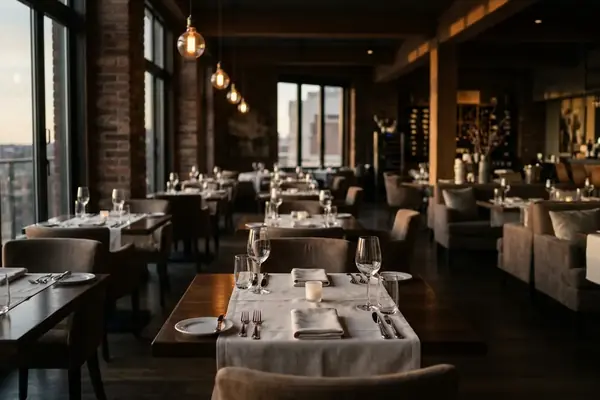
Assess the distance between tables, speaker placement, and traffic from the pass. Ordinary speech needs to carry across your table without bleeding into the next banquette. Choose for conversation first. Match the room to the relationship. Place a first meeting in a quieter corner with a legible menu. A returning counterpart may be comfortable in a livelier Northside dining room.
Call the restaurant 24 to 48 hours before dinner. Ask a host whether a four-top can be placed away from the kitchen pass, bar speakers, service station, and main aisle. Give the restaurant confirmed dietary restrictions and the intended 90- to 120-minute dining window during the same call. In practice, even a quiet corner is a poor fit when the kitchen cannot pace mixed orders together or the assigned table sits in a route used continuously by servers and bussers.
The physical environment shapes the guest's comfort. A table in a high-traffic area leaves everyone bracing against the movement of the floor staff. Securing a protected space allows the conversation to breathe.
Table Geometry and Sightlines
Arrive 10 to 15 minutes before the reservation to inspect sightlines, drafts, speaker proximity, and service traffic. Place the guest of honor where they can see the room without taking the kitchen-door draft or bus-tub lane. The host should take the seat with the clearest view of the server approach. This positioning makes it possible to order wine, catch a glance, or request a pause without breaking the guest's sentence.
At a rectangular four-top, adjacent seats encourage collaborative discussion. Save the natural face-to-face arrangement for a two-top. While restaurant floor plans change nightly, securing a clear sightline keeps the guest at the center of the evening.
Table geometry shapes the dynamic of the meeting. Sitting adjacent at a larger table removes the adversarial feeling of staring directly across a wide expanse of white linen. It aligns your physical posture with the collaborative nature of the discussion. The host's ability to manage the floor staff with subtle eye contact relies on choosing the correct chair before the guest arrives.
Removing Decision Fatigue from the Menu
Pacing the Kitchen to Match the Discussion
Review the restaurant's current menu and wine list 12 to 24 hours before the reservation. Confirm by phone if the online menu is marked seasonal or subject to change. Identify two or three straightforward dishes. Flag long bone-in cuts, messy handhelds, and fixed tasting formats that can control the table for two hours or longer.
Privately brief the server on allergies. Give the guest two or three comfortable ordering paths. A host who reads the menu attentively removes decision pressure from the table. Decide in advance whether this kitchen is built for sharing plates or for composed courses. Set that expectation out loud so no one waits to see who orders first.
A complex menu can stall the momentum of the evening. Reviewing the options in advance allows the guest to focus on the conversation rather than decoding culinary terminology.
This preparation shows care and can build professional trust. The guest experiences a straightforward ordering process without the anxiety of selecting the wrong dish or misinterpreting the restaurant's format.

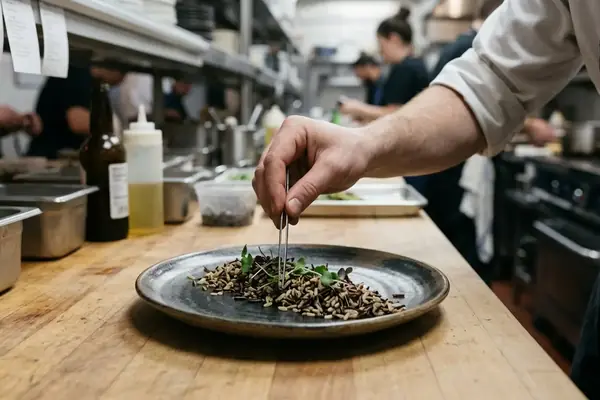
Treat the server as the pacing partner. The kitchen fires courses based on its internal ticket sequence. The host must align their talking points with this culinary rhythm. Use the first 10 to 15 minutes for greetings, drinks, menu questions, and ordering before moving into consequential discussion.
Let everyone settle, receive water, and place the first order before opening substantive business. During the meal, monitor both the conversation and the table. Request a short hold after appetizers when discussion has momentum, or ask the server to fire mains when energy drops.
If a pause is needed after appetizers, request it before those plates are cleared. Define it as 10 to 15 minutes so the kitchen can plan the main-course fire. The rhythm of the meal should support the rhythm of the negotiation. Forcing a complex discussion while the table is being cleared or reset creates unnecessary friction.
Managing the Check Out of Sight
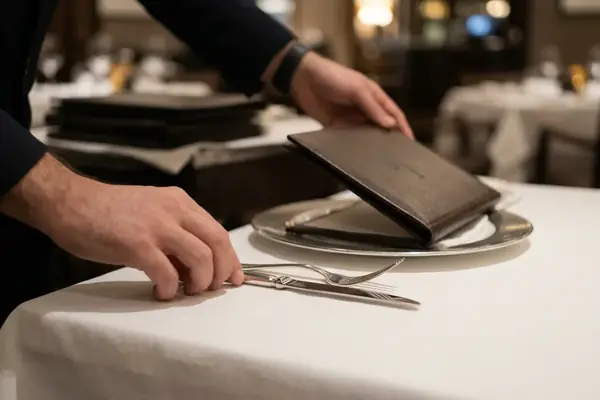
Settle the payment path before it becomes visible. Arrange a card on file when booking or speak with the server within the first 5 to 10 minutes after arrival. Ask that the itemized check be handed directly to the host or processed on a private folio instead of being set at the center of the table.
The host then reviews and signs away from the center of the conversation. Account for any extra pacing work requested from the floor team when leaving a tip. A tight gratuity after a long hold is part of the night the staff will remember.
The end of the meal should feel unobtrusive. A public scramble for wallets undermines the authority and generosity established earlier in the evening. Handling the financial transaction quietly reinforces the host's control over the room. A thoughtful approach to hospitality extends to the floor staff managing your timeline.
The Afternoon-Before Host Checklist
Trust is the residue of the full sequence. A room where voices carry only across the table, a seat that does not isolate the guest, a menu that causes no performance, courses paced around conversation, and payment that never becomes a contest. Run one final check during the afternoon.
Complete the host check 3 to 6 hours before the reservation:
- Confirm a table away from the pass, bar speakers, service station, and main aisle.
- Reread the current menu and identify two or three uncomplicated ordering paths.
- Verify allergies or dietary restrictions privately with the restaurant.
- Tell the server who sits where, and confirm payment.
Send any promised follow-up within 12 to 24 hours, while the conversation and agreed next steps remain easy to identify. In a full-service dining room the check is presented as a shared table object, usually set down in a folder the whole party can see, unless the host has already arranged a private folio with the server—which is why the bill is the last impression of the night, not a footnote after the meal.