The List on the Table Is Already Doing the Work
A restaurant wine list lays out the glass selection, prices, and identifying details that any diner can use without a region vocabulary. Treat the bound pages or single cardstock sheet in front of you as a way to narrow your decision right at the table.
Still, the freeze when the binder lands is real. Food is nearly chosen, the server is two tables away, and your eye jumps between a half-remembered French appellation and the urge to outsource the decision to a price myth. In that quiet dining-room pause, it is tempting to wish you had studied a map before sitting down.
You can skip the map. By reading the glass block, listed prices, wine descriptions, and current food menu during the same ordering conversation, you can break the ordering freeze into four things visible before the server returns: the glass block's texture choices, the price neighbors inside your ceiling, the producer and vintage detail, and the sauce on your chosen plate. The six reads below follow the order of a meal decision—inspecting glasses, locating a spending band, checking identifying details, asking a focused question, matching the plate, and retaining the reason for the choice.
What a Useful Read of the List Has to Prove
Before walking through the six steps, it helps to set the standard for what makes a reading trick worth keeping. A move earns its place at the table only if it meets four observable tests: it shows how the by-the-glass program is built, treats price position as architecture rather than a medal, points to a care signal printed on the page, and leaves the diner with an ask or a pairing that works from the menus and dishes in front of them.
Approaches that only reward prior study—memorizing region trivia, consulting vintage calendars, or drilling grape flashcards—fail these tests even when the underlying facts are true. They demand homework without telling you what this specific dining room is doing tonight. The four tests here rely strictly on observable menu features and an immediate ordering action, and none requires a trade score.
The same four tests apply equally to a short neighborhood list and a long hotel list, because list length supplies a count of choices rather than evidence that those choices form a useful path. At the same time, treat the printed page as evidence of offered choices and specificity only; the paper itself cannot establish bottle freshness, cellar storage conditions, actual turnover, wholesale purchase cost, or an underlying markup rate.
1. Read the Glass Program Before the Bottle Pages
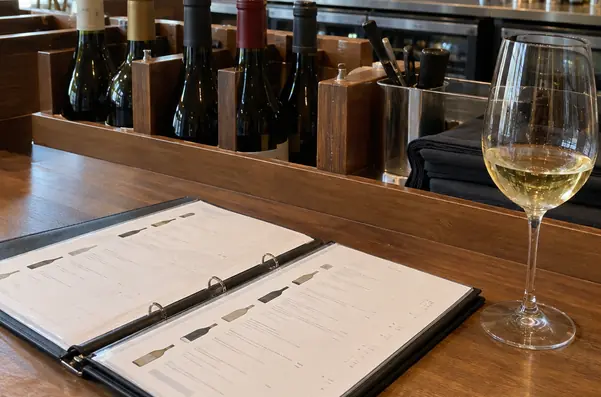
The by-the-glass block shows what the restaurant has chosen to pour tonight. While bottle pages represent the broader cellar, the glass list represents immediate service: what the room expects to open, pour, and replace tonight. Starting here gives you your first working comparison set.
Look for how the roles are distributed across the block. A glass block containing a bright white, a fuller-textured white, and a tannic red gives three distinguishable ordering roles when those descriptions actually appear on the page. When a list uses texture terms like bright, tannic, or off-dry, it hands you concrete language you can carry directly into a question about your dinner. Notice also how the pours relate to the rest of the menu—a deliberate set offers a few distinct styles rather than a scattershot list of one of everything, and its selections stand out as intentional choices rather than merely the cheapest bottles on the page poured by volume.
Patterns pointing in the other direction are just as visible. Repeated generic descriptions, sparse identification, or a heavy emphasis on famous, recognizable labels with no stylistic point of view are quiet signals that the glass block is doing less curation for you. Read that pattern as a cue to look closer at producer details or ask a sharper question, rather than assuming anything about what is sitting open behind the bar, since describing wines as leftovers would require evidence beyond the page. Keep scale in mind, too: a 30-seat neighborhood room and a large dining room have very different service scales, so assess the differentiation among the listed styles rather than awarding points for the sheer number of open wines.
2. Treat the Price Column as Architecture
Once you see the styles on offer, read the numbers vertically within the same serving format—comparing glasses against glasses, and standard bottles against standard bottles. Always verify the stated format before treating two numbers as neighbors, since a glass, a 375-milliliter half-bottle, and a 750-milliliter bottle represent entirely different quantities.
A price column is the architecture of how a restaurant structures its offerings, not a linear quality ladder. A higher number on the page can reflect scarcity, label recognition, specific purchasing arrangements, or simply where this restaurant decided to park its margin on a trophy page. A lower number can reflect a high-volume house pour. Neither position is a medal, and none of those underlying business factors can be calculated from ordinal position alone.
This is why it pays to retire the old habit of automatically ordering the second-cheapest glass or bottle. That folk shortcut assumes the list was built as a trap, ignoring how the selection was actually assembled. Instead, read the logic of the column right in front of you: locate the entry cluster where several choices sit at similar spending levels, spot any pronounced upward jump into bottles meant to be seen, and inspect the middle band. On a thoughtful list, that middle band offers distinct textures and styles; on a flatter list, it repeats similar descriptions at progressively higher prices.
Setting Your Price Band
Set a ceiling you are actually comfortable spending tonight, find the cluster of neighboring choices just inside that ceiling, and compare their textures rather than their rank from the bottom.
3. Find the Care in What the List Bothers to Print
You do not need a sommelier standing at your elbow to spot curation; quiet care signals are printed right in the line items. The simplest test is whether an entry gives you enough specificity to identify the bottle and understand its job at the table.
- Named producers and sites: Listing a specific producer—and a vineyard designation when relevant—makes an entry identifiable and reorderable, unlike a bare line that prints only a grape name and a country.
- Consistent vintage handling: Vintages printed consistently down the page, including an explicit non-vintage (NV) mark on sparkling or fortified wines where appropriate, show that someone maintains the document as stock changes.
- Flexible formats: An occasional half-bottle (commonly 375 milliliters, half of a standard 750-milliliter bottle) or carafe option acknowledges that not every table wants the same volume.
- Dish-anchored notes: A brief staff note connecting a wine's brisk acidity to the current menu's fried starter gives you a concrete ordering path, whereas a generic slogan like "perfect for every occasion" leaves you guessing.
The opposite tells are equally calm and legible. A multi-page dump of regions with no descriptive path, trophy labels lacking producer details, or generic picks that could sit unchanged on any laminated sheet in any city tell you that navigation is entirely up to you. Page count itself never demonstrates care; specificity and a clear path through the options do.
4. Ask for a Lane the List Has Already Opened
With a texture in mind, a price band chosen, and a couple of specific entries spotted, you have everything required for a focused conversation. Address these questions directly to the server handling your order—this approach is built for regular dining-room service and never assumes a certified sommelier is on the floor.
Instead of asking a wide-open question like "what's good tonight?", point to a listed glass or bottle that is close to what you want and ask for a specific adjustment inside your spending band. Using the list's own language keeps the exchange grounded in tonight's meal:
- Anchor to texture and price: "This glass sounds close to what we like. Is there something a bit lighter, with less tannin, in this same price band for the braise?"
- Check tonight's service condition: "Between these two glasses, which one is open and pouring well right now?" This simple prompt supplies live kitchen-and-bar information that the printed page cannot hold.
- Connect directly to the kitchen: "Which of these two neighbors would you choose with the rich pasta, and why?" or "Is there a listed wine you particularly recommend with this dish?"
If a server's reply drifts into a long regional history lesson, gently steer the question back to the glass: ask whether the wine will feel lighter, richer, drier, or more tannic alongside the food you just ordered.
5. Match the Plate's Weight Instead of a Region Chart
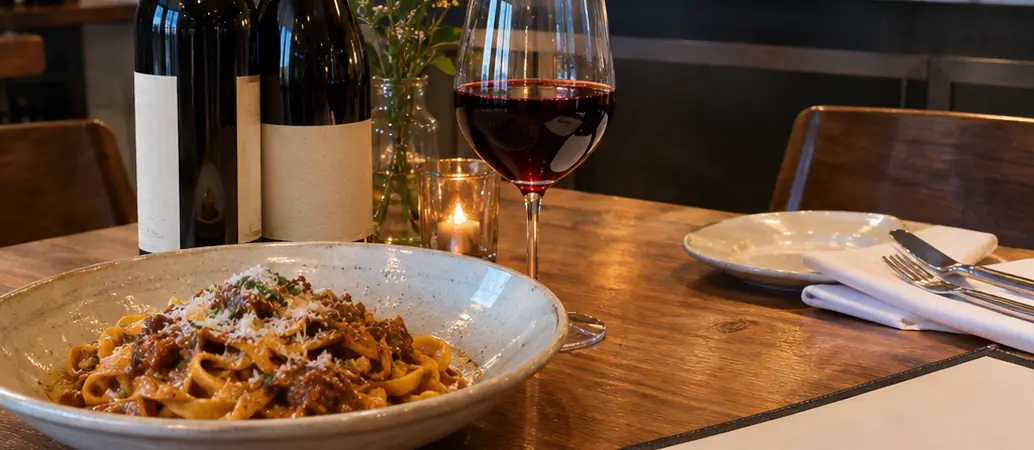
For decades, casual advice leaned on color-matching—red with meat, white with fish—as a quick default. Replacing that habit with plate weight gives you a reliable, positive method that works without a memorized map of European rivers. Look at how the kitchen prepares the dish, paying attention to sauce, fat, salt, sweetness, and heat. A lightly dressed fish crudo and a fish fillet baked in a rich cream sauce share a protein, yet they ask for completely different companions in the glass.
Match the intensity of the plate first: a delicate preparation calls for a quieter wine that will not overwhelm it, while a slow braise or dense sauce gives a fuller-bodied, more tannic wine plenty of weight to meet. From there, use three practical working heuristics to narrow your candidates on the page:
- Fat and richness welcome acidity: A wine described as bright, crisp, or fresh cuts across heavy cream, butter, or marbled meat, resetting your palate between bites.
- Salt and fried edges like bubbles or high acid: Sparkling wines or brisk, high-acid whites handle salty snacks and crispy batters cleanly.
- Sweetness on the plate demands at least equal sweetness in the glass: A noticeably sweet glaze or fruit component can make a bone-dry wine taste sharp and stripped of fruit, so look for an off-dry role when the dish leans sweet.
Treat these as working heuristics that generate strong candidates for the present meal rather than a guaranteed pairing law. Once you have two contenders that match the plate's weight, let your server break the tie.
6. Keep One Bottle Logic You Can Reuse Tomorrow
A successful order leaves you with a repeatable pattern rather than a cellar catalog in your head. Walk through how the whole sequence plays out on a single night. Suppose your table orders a rich pasta. You skip past the trophy bottle page, find your comfortable middle spending band in the glass block, and spot two wines described as bright and fresh. Keeping both cost and serving format aligned, you ask the server two distinct questions: which glass is showing cleaner tonight, and which one better handles the heavy sauce. You pick based on that direct answer, enjoy the meal, and keep one simple takeaway: fresh acidity balanced a rich sauce.
Next week, at a completely different spot, that remembered relationship between food weight and wine texture is the only luggage you need to bring. You can leave the appellation lists, vintage charts, and personal grape rankings behind, because they do nothing to tell you what is open and singing in the room you are actually visiting.
Every item in that opening glass block comes back to the 750-milliliter boundary: the list reveals how a restaurant offers a finite bottle for sale, while tonight's condition still belongs in a question to the server. Because a standard wine bottle holds exactly 750 milliliters, every by-the-glass listing commits the bar to pouring a handful of glasses from a finite container— putting a known volume behind the bar and a visible, readable plan for it right in your hands.