Three Kinds of Rooms Share One Weekday Clock
A Northside weekday lunch habit is built from three service formats — a sit-down dining room, a counter, and a takeaway window, and each has to clear the same workday limits of pace, portion, and value or it stays a one-off. Most midday rooms are built to impress a single visit. Surviving a repeat choice on Thursday requires a completely different architecture.
Northside Restaurant covers these midday blocks as a food publication focused on Northside dining, looking at how dishes hold up when the clock is tight. A plate can show remarkable kitchen craft and still ruin a Tuesday if the ticket stalls behind a six-top or the portion belongs at an eight-o'clock dinner. The real tension sits right between culinary ambition and the rigid borders of a work calendar.
To earn a permanent slot in a weekly rotation, table service, counter ordering, and collection from a takeaway window all face the exact same three tests: ticket movement, portion fit, and the amount of the noon hour the purchase preserves. How a kitchen clears those hurdles determines whether a spot belongs in your weekday routine or stays strictly in the weekend column.
How Fast a Ticket Has to Move at Noon
Pacing at lunch is a structural match between a restaurant's service path and the actual gap in your calendar. Start with your hard departure and return deadlines, then trace every step the ticket has to take between them. A quiet Monday cannot establish performance when the line doubles, and a weekday lunch visit says little about how a room handles dinner or weekend brunch.
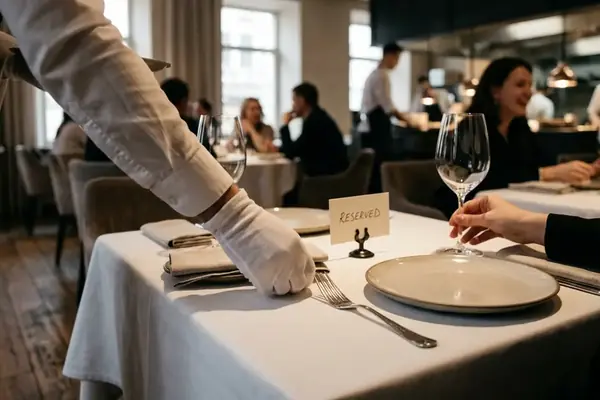
In a sit-down dining room, the operational gap between an order starting from raw and food already moving toward the pass becomes critical the moment the tables fill. Look around before opening the menu to see what is already firing. Sitting down also commits you to a second, hidden wait at the end of the meal: securing the check and processing payment when the floor staff is triple-sat.
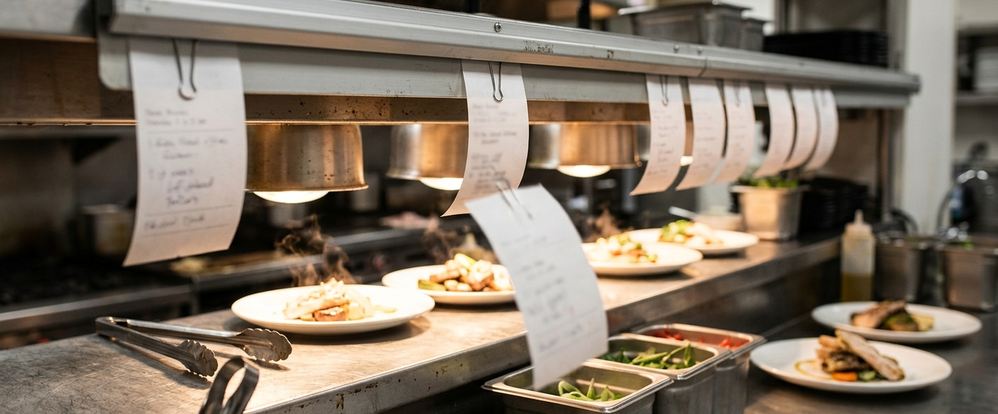
At a counter, the useful signal is a visible route from the register to the pass. Before joining the queue, locate the order point, the pickup counter, and an available stool or standing ledge that does not require entering a second wait just to set your tray down. The dining room hides the fire and payment waits, the counter exposes order-to-pass movement, and the window shifts part of the service test to the walk back and the opened bag.
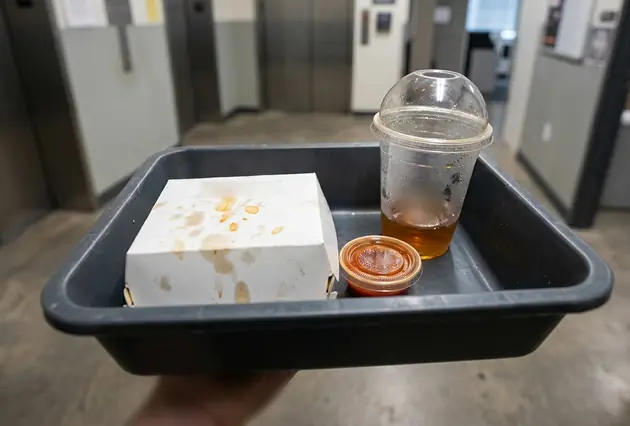
Takeaway windows look fast because there is no dining room to manage, yet the clock keeps running after your number is called. The true finish line for a window order is food unwrapped and ready to eat at your destination. If the kitchen hands over a bag right on time but the walk back leaves you about five minutes to eat before a call, the pacing test failed.
A Plate That Ends Before the Afternoon Does
Treat portion size as a question of schedule fit. A weekday lunch should finish while your attention is still sharp enough for the afternoon's work, delivering enough fuel to carry you to evening without plating a dinner-scale commitment at noon.
Reading a menu for midday scale means scanning for specific structural cues before you let appetite make the call:
- Half portions and split plates: Built specifically to deliver the kitchen's core flavors without the volume of an evening entree.
- Soup-and-something pairings: A bowl paired with half a sandwich or a small salad gives a clear, bounded eating commitment.
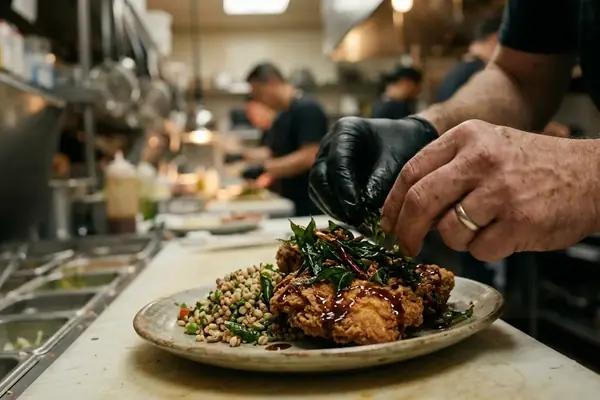
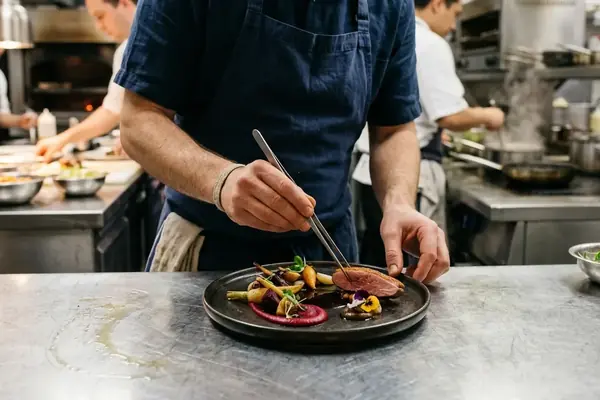
- Single composed plates: One protein, one starch, or a unified grain bowl that finishes cleanly without extra side dishes cluttering the table.
- Sharing spreads: Platters or multi-dish combinations explicitly intended for the table, which turn into a heavy storage problem when ordered solo.
Service format changes how you verify scale. A counter lets you inspect the actual bowls and plates leaving the pass before you reach the register. In a dining room, menu copy often leaves volume ambiguous, requiring a direct question to the server about whether a dish is built for one midday appetite or meant to anchor a long table.
Takeaway adds structural mechanics to the portion test. A plate that leaks through its cardboard, loses its crust to trapped steam, or demands roughly five minutes of delicate assembly at your desk adds unpaid labor to your break. An oversized lunch can undermine repeat use even when its price appears generous, because packing, carrying, and storing the remainder becomes part of your afternoon appointment.
The Check Has to Buy Back the Noon Hour
Midday value equals time returned plus a portion that fits the rest of the afternoon. Evaluate the posted price on the board or menu directly in front of you alongside the total minutes the complete visit consumes, from ordering and payment to collection and the walk back.
A bargain lunch that costs you the first ten minutes of your next meeting is an expensive mistake. Conversely, a slightly higher check for a composed plate that is already moving toward the pass can be the smarter weekday buy because it hands back twenty uninterrupted minutes of your break. The value test works without a price-per-minute formula; it simply asks whether the money spent protected your schedule.
Each of the three formats sells a distinct type of midday return:
- The Counter: Sells speed you can audit from the doorway. You pay to watch the line move, see the food hit the tray, and control your own departure time.
- The Dining Room: Sells a seated pause and full table service. It is only a strong buy on days when your calendar actually has space to absorb the check presentation.
- The Takeaway Window: Sells pure portability. Its value is realized only after the return walk, when you open a container that survived the trip intact.
Charm That Fails on a Tuesday
A neighborhood spot can be well worth a leisurely Saturday visit and still be the wrong Tuesday stop. Occasion-based dining separates weekend discovery from workweek survival. On a normal Tuesday, the charm of a bustling room often masks severe friction points.
Watch for four plain failure signs when auditioning a spot for your regular rotation. First, a line with no visible end where you cannot see completed orders actually leaving the pass as the queue inches forward. Second, a handwritten specials board whose intricate builds repeatedly delay the kitchen beyond a standard break. Third, portions sized exclusively for group sharing when you are eating alone on a deadline. Fourth, a fragile takeaway item — like a dressed-to-order hot sandwich on delicate bread, that must be eaten within the next block or it dies in the foil.
The Weekday Habit Rule
A true weekday habit is the stop that clears pace, portion, and time returned on an ordinary workday, rather than the showpiece room you would recommend to an out-of-town visitor.
One Block, Five Lunches, Copied in Order
In this hypothetical rotation, the diner's gap runs from 12:10 to 12:55 — a hard 45-minute boundary covering travel, ordering, preparation, eating, payment, and the walk back. Within walking distance is one commercial block containing a counter, a small dining room, and a takeaway window.
- The block gets measured on an ordinary Tuesday: The diner records the outbound and return walking times separately on a normal workday, rather than relying on a holiday-week visit or a rainy-day guess. That establishes the baseline commute before spending a dollar.
- The counter takes the two fixed-meeting days: With a 1:00 PM obligation immovable on both days, the diner checks the board and the visible ticket path to the pass, then either takes an open stool immediately or carries the bag straight back.
- The dining room gets the widest midweek gap: On the day the afternoon starts a little softer, the diner asks the server what is already firing in the kitchen. If the room is full, the order comes from that active service path rather than starting from raw.
- The takeaway window covers a desk-bound day: The order is an item that holds its heat during the measured return walk, or a dish built to be eaten cold. The 12:55 boundary still applies: the meal must be unpacked and eaten by then. An order merely called at the window has yet to clear the test.
- Friday stays flexible: The diner repeats the fastest successful stop from earlier in the week, or stays in completely if none of the rooms met the clock.
- The rotation gets two ordinary workweeks: The same five-day allocation repeats the following week. If the dining room causes two missed 12:55 return deadlines during that period, it loses its midweek slot to the counter or window that got the diner fed and back on time.