From the House Meal to a Price on Every Line
For a long stretch of public dining, the price was the meal of the house, a single figure for whatever the room was serving that day. Under the custom of the table d'hôte, the host determined the shared offering and everyone at the table ate the same progression for one set charge.
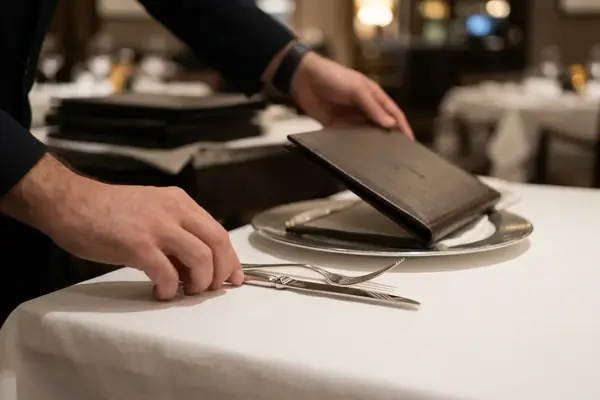
Between the 1780s and the 1830s in Paris, public dining expanded a distinct alternative alongside the house meal. As cooks left private households to open and staff public rooms, they handed guests a card of separate dishes, each carrying its own number. Historian Rebecca L. Spang documents this shift in The Invention of the Restaurant, tracing how individual ordering reshaped the relationship between the dining room and the kitchen. Guests began ordering line by line rather than accepting the house meal.
That format change altered the dining experience permanently. Once the number sat on the line beside a specific dish, diners started judging the kitchen item by item, treating that figure as a direct measure of the plate—even though a menu price states what the restaurant charges for the offering rather than itemizing what it cost to cook.
Ingredient, Labor, Rent, and What Gets Thrown Out
Reading a menu accurately starts with tracing a plate's working cost in production order: what the dish uses, who has to prep and serve it, what it costs to keep the dining room open, and what never reaches the table.
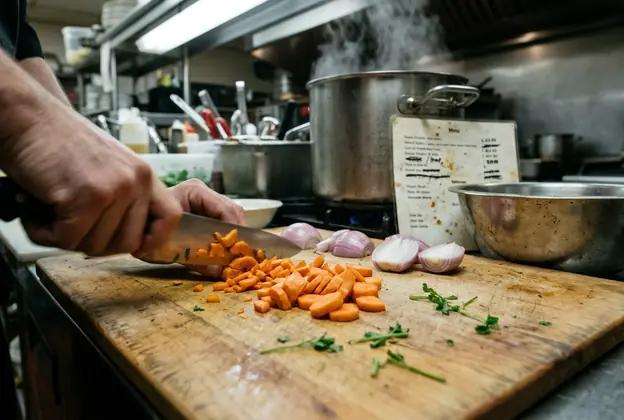
Consider the asparagus-to-asking-price breakdown, where purchased spears, trimmed edible yield, preparation and service work, the room's operating costs, and stock left unsold all sit beneath one printed line. Purchased weight and edible yield are different quantities. Asparagus loses its woody ends before hitting a pan, whole fish requires fabrication, and roasted meats lose weight in the oven. The kitchen pays for the whole crate or carcass, then absorbs the trim loss before plating a single order.
Labor attaches to that ingredient long before the ticket prints. Two plates on the same menu can share a principal fish and still carry very different numbers because of prep time, yield, and how many covers the line can push during a rush:
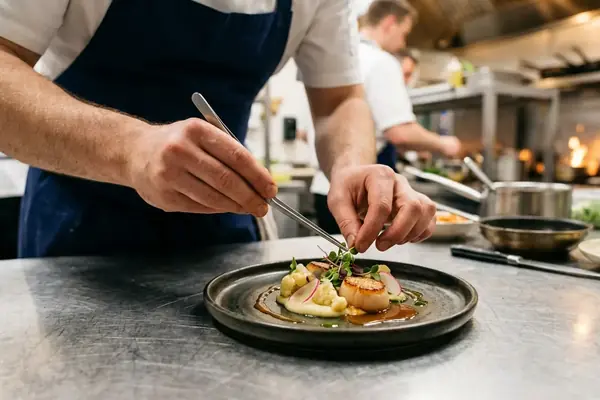
- Usable yield and fabrication: Scaling, gutting, and portioning a whole fish leaves bones and trim behind, whereas a dish that folds the fish into a farce uses the product differently.
- Preparation and assembly: A pan-roasted fillet takes clean butchery and careful station work during service; a filled fish pasta demands dough mixing, rolling, filling preparation, and hand-shaping hours before the doors open, plus cleanup after the final order leaves.
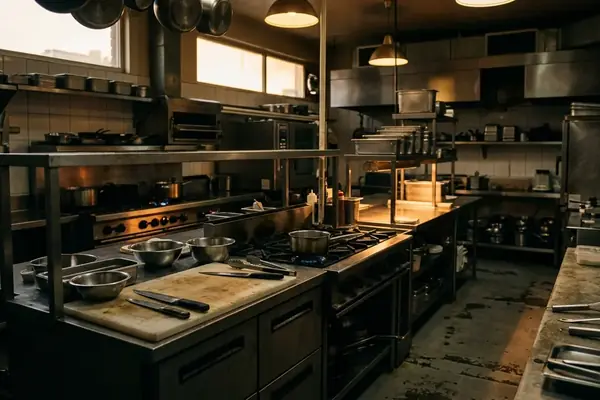
- Occupancy and perishable risk: Rent, utilities, and linen cleaning remain fixed expenses through a quiet Tuesday service, while prepped portions or fresh perishables that go unsold after the last table leaves become pure loss.
Food and labor form the immediate core that cooks feel on the line. Occupancy and waste act as the structural layers a guest rarely pictures when reading a single figure on the page.
When the Season Moves the Number
When a morning delivery arrives at the back door, the chef checks condition, usable yield, and invoice price before deciding what the menu can honestly carry that night. A bundle of thick asparagus with more woody material leaves less edible product from the purchased case, raising the cost of serving the same portion size. For a soft-shell crab dish, a sudden shift in delivered size or wholesale cost changes what the kitchen can plate at the existing number. During a thin tomato week, a careful kitchen will rewrite the preparation or pull a raw tomato salad entirely rather than serve pale slices that miss the mark.
Kitchens can respond between successive menu printings or even between the first and last seating of one evening. Some rooms let the printed number move with the delivery or swap the dish off the sheet. Others freeze the price while quietly shrinking the portion or making the cooking more cautious.
Signs of Menu Strain
Watch for observable shifts between the printed card and the table: a signature dish pulled mid-service, a promised accompaniment replaced with something materially less substantial, or an unchanged figure sitting beside a plate that no longer matches its written description.
Ambition, a Fair Plate, or a Kitchen Under Strain
When one dish carries a noticeably steeper number than the items around it, there are three distinct possibilities: the figure is paying for demanding technique or a scarce product, the plate earns its place against its neighbors through generous execution, or the number is protecting the room's overhead more than the food on the plate.
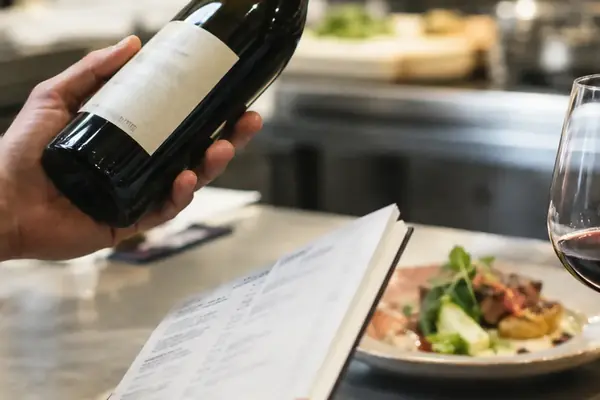
To sort those out during a special occasion or a casual weeknight meal, use a structured comparison right at the table. Start by finding two neighboring dishes that share a protein and carry similar portion language—keep "starter," "main," "whole," and "for two" in their own lanes, since mixing portion tiers makes direct price comparison misleading. Next, read what the descriptions actually promise before treating the higher number as the superior plate. Words like "handmade pasta," "picked crab," or several separately prepared accompaniments name specific labor and product that you can verify as soon as the server sets the dish down.
There is a strict same-night menu boundary to keep in mind: a Northside diner can compare two fish dishes and test their promises on arrival, though no guest can read payroll or supplier invoices from the gap between their prices, making any editorial reading partial to that single visit.
Same-Card Price Check
Judge a dish's number against the rest of that night's card and the plate that actually arrives, never against a memory of what a similar dish cost at another restaurant or in a previous season.
Which Number Do You Trust Tonight
Menu literacy comes down to two observation points within the same meal. Before ordering, read the description to see what the price appears to be protecting, whether that is a fleeting seasonal ingredient, hours of prep work, or a substantial plate with multiple garnishes. When the food arrives, check the portion, cooking, and accompaniments against that initial promise.
If the number is information, which dish on tonight's menu are you willing to pay for because of what it has to cover, and which are you only considering because the figure looks serious?