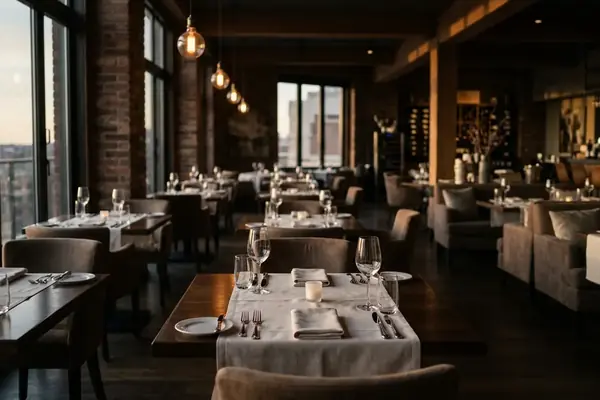
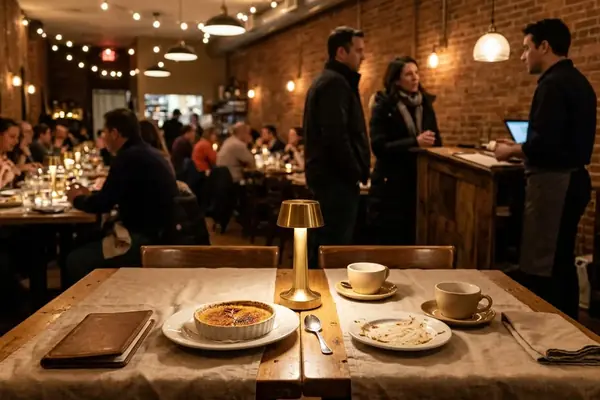
A loose plan for twelve turns a milestone birthday into a service problem that the guest of honor has to manage from the head of the table. At that headcount, a birthday dinner crosses a quiet operational threshold where ordinary table manners and a standard reservation slot stop protecting the room.
What Twelve Guests Can Cost a Milestone Night
When a host treats a party of twelve like a slightly larger table for four, the evening unravels along four distinct operational handoffs: room allocation, course pacing, cake service, and payment. First, the party is led to a table that cannot comfortably hold twelve adults without pinning two people against a service pillar or the kitchen swing door. Then comes the twelve-cover service pileup: the toast meets arriving entrées, the cake follows before savory plates are cleared, and the birthday person becomes the table's dispatcher. By the time coffee is mentioned, twelve people are leaning over stained linen, doing arithmetic on their phones after dessert.
These failures begin days earlier in the booking calls and written agreements. Twelve covers must include the guest of honor; inviting twelve friends plus the birthday person requires thirteen seats, a counting slip that forces a last-minute chair onto a crowded table corner. Getting those details right on paper changes the entire texture of the dining experience. The birthday person stays the reason for the room, the kitchen lands every plate while it is still hot, and the evening ends as calmly as the booking began.
Fix the Guest List and the Spend Before You Call
Treat twelve as a firm working roster that includes the guest of honor, and lock the invitation rules before picking up the phone. A seasoned host decides early on plus-ones, children, and whether a partner who wants to stop by just for a toast needs an actual chair. Anyone who enters the room during dinner requires a seat in the count.
Build a single twelve-name roster that records a seat requirement and written dietary limits against each person. Separate true food allergies from other food restrictions, and log alcohol preferences alongside anyone who will refrain from eating the centerpiece dish. Giving the restaurant a clean document prevents the floor manager from guessing at 7 p.m. while twelve people are reading the drink list. For the host's own schedule, setting a guest-response deadline 48 to 72 hours before the restaurant's guaranteed-count deadline creates a practical planning buffer to chase silent invitees before financial commitments lock in.
Anatomy of the Group Spend
When you discuss pricing on the initial call, build the spending commitment from the restaurant's quoted charges rather than multiplying a main course price by twelve. Account separately for each bucket on the eventual bill:
- Food and Menus: Per-person menu pricing or estimated shared platter totals.
- Beverages: Wine bottles, cocktails, and nonalcoholic pairings.
- Cake and Room Fees: Outside bakery plating charges, candle fees, or dedicated space rental.
- Taxes and Service: Local tax, automatic gratuity, or administrative service charges.
If the venue quotes a food-and-beverage minimum, ask whether that figure functions as a spending threshold, which purchases count toward it, and whether tax and service charges sit outside it. Avoid automatically adding the minimum on top of the food bill; treat it as the floor your food and drink orders must reach. Disclose any lingering uncertainty in attendance during this first conversation, and get the exact deadline for the guaranteed headcount in writing.
Ask for a Room That Can Actually Seat Twelve
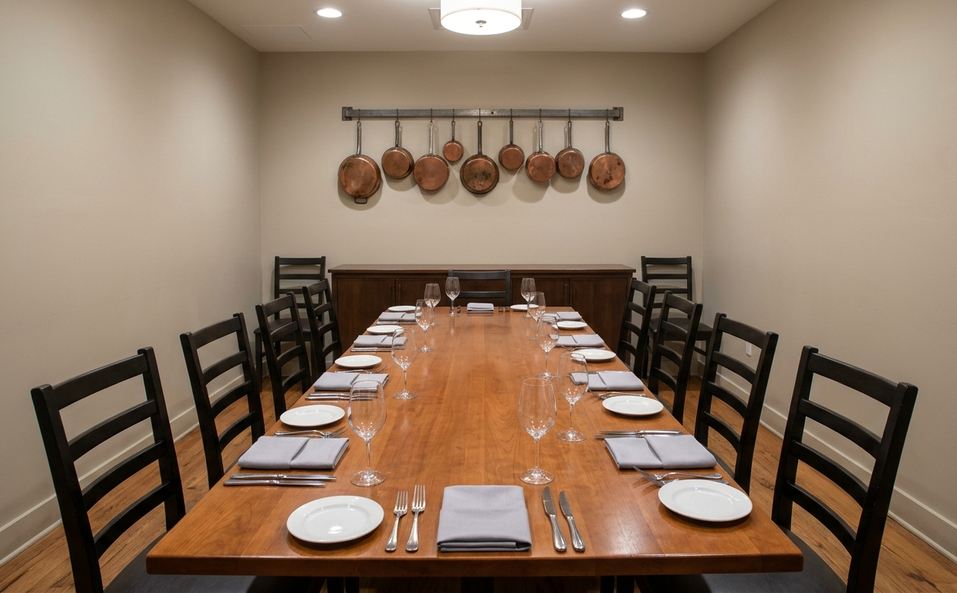
Private and semi-private spaces are different products in restaurant guides and floor plans, even when booking forms lump them together. A true private dining room has a closing door that seals out the clatter of the bar. A semi-private space is frequently an alcove or screened area with an open side that shares both acoustics and service traffic with the main dining floor.
Rather than relying on a room's advertised maximum capacity, ask the events coordinator to describe the exact layout for twelve seated diners. Check the chair positions at the table ends to ensure nobody is straddling a table leg or squeezed into a service aisle where servers need space to pass with heavy trays. For a Northside booking, ask directly how much sound carries from the main dining floor during full Friday or Saturday service, so you know whether a toast can actually be heard from one end of the table to the other.
Look at the room from the guest of honor's chair. Confirm that the birthday seat has a clear sightline to the rest of the group, that the route from the street to the table offers step-free access if any guest needs it, and that the staff has a designated spot for coats, gift bags, and any mobility aids that will not block the table route or exit. Finally, request exact clock times for guest access, seating, and required departure. Twelve seats is not the whole booking: the agreement must also reserve enough time for the final savory course, the candle moment, cake service, and a settled check before the room is due back.
A Set Menu Is How Twelve People Eat on Time
Handing twelve guests the full dinner menu on arrival is the fastest way to derail kitchen pacing. Unrestricted à la carte ordering introduces too many individual cooking and ticket-timing variables, causing appetizers to straggle out in waves and landing the toast right in the middle of entrée delivery.
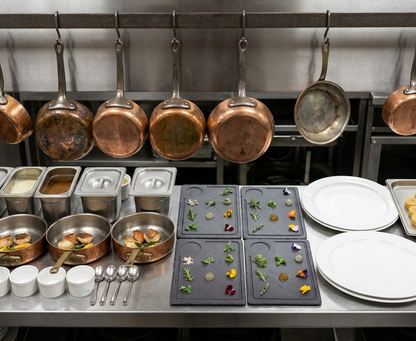
A better method is negotiating a compact set menu built around the birthday person's favorite dishes, then asking the kitchen which formats it can reliably fire together for twelve covers. A solid starting point for negotiation is offering two choices for each course that allows a selection, letting the restaurant confirm the actual lineup its line cooks can execute at peak hours. Record whether the kitchen requires guest entrée choices in advance and write down the exact submission deadline.
During this menu call, decide between plated courses and family-style platters. Plated service keeps portions neat and pacing formal, while family-style dishes work well when the table has enough depth to hold serving bowls without crowding wine glasses. Obtain explicit confirmation from the coordinator that individually plated dietary alternatives—for the vegan cousin or the gluten-intolerant friend—will hit the table at the exact same moment as everyone else's food.
Settle the beverage path with the same clarity. Specify in the agreement whether drinks are charged by open consumption, poured from an agreed number of pre-selected bottles on the table, or sold as a fixed pairing. Record a thoughtful nonalcoholic path separately so non-drinkers receive proper glassware and pacing rather than an afterthought soda. Schedule a quick host review of the written menu and final headcount 24 to 48 hours before dinner, treating that check-in as a verification step rather than permission to rewrite an already guaranteed order.
Deposits, the Cake, and Who Gets the Floor
Once the room and menu are aligned, the booking shifts from hospitality to contract details. Read the restaurant's cancellation and date-change terms carefully before authorizing a deposit. A changed date preserves the deposit only to the extent allowed by the restaurant's written terms, so never assume a payment transfers automatically if the birthday person catches a cold.
Your written deposit record should state five specifics:
- The exact dollar amount paid.
- The date the payment was processed.
- The hard deadline for full or partial cancellation refunds.
- How the restaurant treats a request to move the reservation to a new date.
- Confirmation of how the deposit will be credited toward the final bill on the night.
Choreographing the Cake and the Toast
If you plan to bring an outside cake from a neighborhood bakery, clear it with the manager early. Confirm the afternoon delivery window, refrigerator storage space for the box, the per-person cutting and plating charge, and who supplies and lights permitted candles. Some dining rooms forbid tall sparkler candles under fire codes, and knowing that on Tuesday prevents an awkward argument at the table on Saturday.
To prevent the cake from colliding with dinner, write the end-of-meal sequence explicitly into the event sheet: final savory plates cleared, agreed toast or candle moment, cake presented whole at the table, and cake returned to the side station to be cut and served. Name one host contact at the table who holds sole authority to give the manager the cue. Assign one person to deliver the toast, propose a two-to-three-minute window as a planning target, and ask the manager to hold servers outside the room during those three minutes so staff are not left standing awkwardly with melting plates over guests' shoulders.
Close the Check Before Anyone Reaches for a Wallet
The last ten minutes of a birthday dinner determine what everyone remembers on the ride home. Choose a single payer in advance, or obtain the restaurant's explicit agreement to a defined split before guests ever walk through the door. Confirm whether the point-of-sale system and house policy accept one card, equal splits, or specified amounts across multiple cards, and tell the guests the chosen arrangement before the night of the dinner so nobody pulls out a wallet at the table.
When the final course winds down, have the designated payer step away from the table to review the folio out of the birthday person's sight. Check that the initial deposit appears as a direct credit, verify that beverage tallies and cake plating charges match the pre-dinner agreement, and confirm any minimum-spend adjustments. Before writing in a tip, look closely at the bottom lines. Avoid treating the phrase "service charge" as automatic proof that server gratuity is covered; ask the manager to explain what the house service charge pays for and whether floor gratuity sits separate.
Once the card is run and the receipt is tucked into a pocket, thank the servers and the floor manager by name while they are still in the room, before coats go on and chairs push back. Every decision in this process protects a single arithmetic threshold: because the guest of honor occupies seat number twelve, a twelve-person reservation holds just eleven invited guests.