Why Does Sitting Alone Still Feel Like Breaking a Rule?
A host looks up and asks, “Just one?” The question lasts a second. The awkwardness can follow you all the way to the table.
Much of that discomfort comes from the room itself. Dining rooms cluster attention around couples, shared tables, and service scripts built for groups. An empty chair becomes conspicuous because the furniture suggests somebody is missing. Operationally, though, one guest is one cover: the host assigns a seat, the server opens a check, and the kitchen receives a standard order ticket.
That distinction matters. Solo dining gets easier when you treat it as a sequence of ordinary decisions rather than a public test of confidence. Choose where to sit, decide how you want the room to feel, ask staff questions they can answer, and order a meal with a clear beginning and end.
The most useful window comes during the first 5–15 minutes, between arrival and the first drink. Make three decisions in that span: your preferred seat, your opening order, and whether a book or notebook will stay on the table. Once those are settled, the dining experience usually finds its rhythm.
Choose a Seat That Works for One
Read the room before giving your name. Locate the counter, bar, chef’s counter, window ledge, high-tops, and two-tops along a wall. Each creates a different level of exposure and activity.
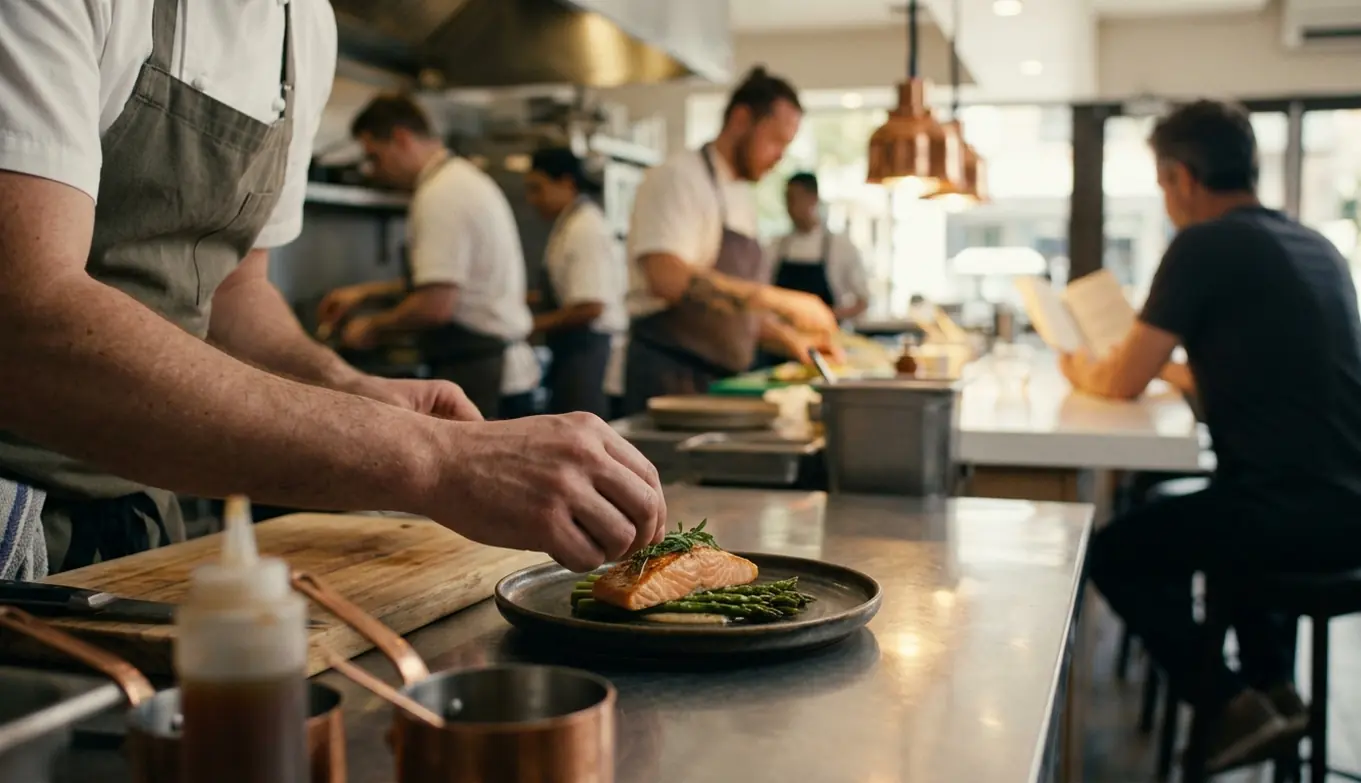
Counters tend to work best because every stool already functions as an independent place. You can watch drinks being built or plates leaving the pass, and neighboring diners face the same direction. Conversation remains optional.
Use one direct request at the stand: “Counter if you have it; otherwise a two-top along the wall is great.” The host receives two workable options without having to interpret an apology about party size.
Take Ten Seconds
Assess an offered seat for 10–20 seconds before committing. Check the speaker volume, server traffic, view of the room, and storage for a coat or bag. A table near the pass may offer useful energy; the same table becomes tiring if staff squeeze behind it every minute.
If only standard tables remain, choose a two-top near a wall over one in the center. Keep the spare chair clear. A coat draped across it or a phone propped up like a companion reinforces the impression that the table is waiting for somebody.
Time the Room, Not Just the Reservation
Arrival time changes the social geometry of a dining room. Shoulder hours reduce the density of couples and large parties, while a busy counter supplies ambient energy that asks nothing from the diner.
Early Service
For menu study and easier staff access, arrive 15–30 minutes after opening. The room has started moving, yet the host is less likely to be handling a full reservation wave. At neighborhood restaurants, this period also gives the floor enough time to settle before you order.
Mid-Service Buzz
If silence makes you more self-conscious, arrive after the first tables have ordered. Open kitchens, bars, and counter-driven rooms provide movement without requiring conversation. A solo diner can follow the work of the room while eating at an unforced pace.
After the Rush
A post-rush visit works best 60–90 minutes after the locally typical dinner peak begins, provided at least 45–60 minutes remain before the published kitchen close. Check that closing time before leaving home. A late arrival with too little kitchen time creates pressure that has nothing to do with dining alone.
At peak periods, bar walk-ins often move faster than waits for two-tops. Ask for the quoted range and reassess after 20–30 minutes instead of repeatedly returning to the host stand.
Talk to Staff Without Explaining Yourself
Staff already know how to serve a single cover. Give them decisions to work with: confirm the seat, ask one precise menu question, order clearly, and answer check-ins briefly.
Specificity produces better restaurant insights than “What’s good?” Ask, “Is that enough for one with a starter?” or “Which by-the-glass pour suits the fish?” Questions about portion size, spice, preparation, and pairings let the server connect kitchen knowledge to an actual choice.
A short exchange can also create natural contact without turning the server into a substitute dining companion. “What’s drinking well by the glass?” has a purpose. So does asking which dish the kitchen is especially pleased with that evening.
Keep Check-Ins Clean
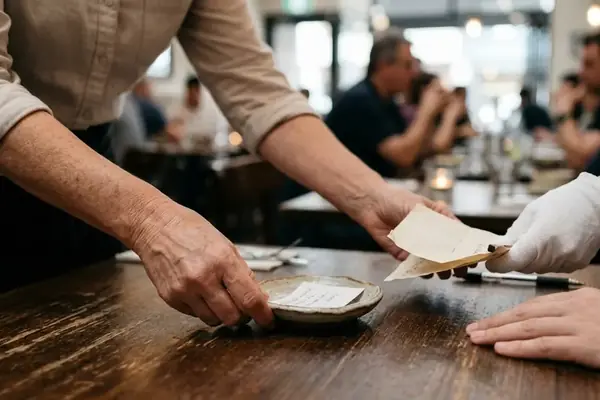
Servers commonly return 2–5 minutes after food arrives. One sentence handles the moment: “Everything’s good, thank you.” If something needs correction, state it directly while the kitchen can still respond.
Quiet stretches require no explanation. At a chef’s counter they may signal close attention; at a formal tasting table they may simply reflect the course timing.
Order and Pace Like the Meal Was Always for One
First, identify the menu structure. Individually plated menus, small-plate lists, and family-style menus require different ordering logic.
For a conventional menu, build a deliberate arc: a starter, a focused main, and an optional dessert or digestif. This gives the meal shape and prevents the common solo-dining habit of ordering too little, eating quickly, and leaving before the room feels familiar.
Handle Share Menus Carefully
Ask whether a dish comes as a half order, holds up well over time, or can be replaced by two smaller plates and a staple. A large family-style centerpiece can crowd the table and decline before one diner can finish it.
Measure the Platter
Before ordering the menu’s centerpiece, ask how many plates it usually occupies and whether the kitchen considers it suitable for one. Portion language such as “for the table” provides less useful information than the dish’s physical size and pacing.
A practical course rhythm allows roughly 10–20 minutes for a starter and 20–35 minutes for a main. With several small plates, ask for two waves separated by about 10–15 minutes. Staging protects temperature, preserves tabletop space, and gives the meal a readable progression.
I use the same test for dessert: does it complete the arc, or am I extending the visit because the empty chair has become distracting? A clear answer keeps the pace tied to appetite.
Small Rituals That Make Solo Dining Look Deliberate
One grounded object works better than a barricade of screens. Bring a slim notebook or paperback, keep both hands free on the bar rail, or watch the kitchen. Choose the ritual before sitting down so it feels like part of the meal.
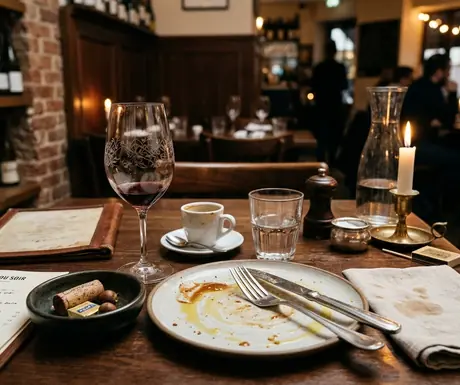
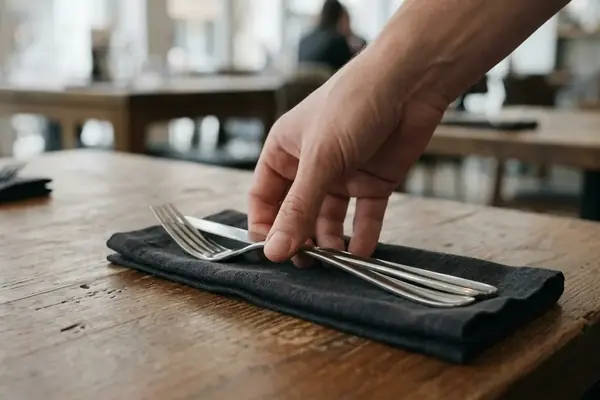
Keep any book or notebook within the footprint of the place setting and away from incoming plates, water, and condiments. When the next course arrives, close it. That small action tells the server you have noticed the food and clears the working surface.
Give the Phone a Job
Use the phone for a defined task: check a note, answer a message, or take one plate photo. After 30–90 seconds, return it to a pocket or bag for the next 10–20 minutes of the course. Continuous scrolling narrows posture, reduces eye contact, and makes ordinary pauses feel longer.
Look around occasionally. Notice the specials board, glassware, pacing at nearby tables, or the sequence at the pass. Menu literacy grows from these details, and the room starts to feel like information rather than an audience.
Adjust the Playbook by Restaurant Type
Confidence does not require performing the same personality everywhere. Service format should determine how much you speak, where you place your attention, and how firmly you control the pace.
Counter-Driven Spots
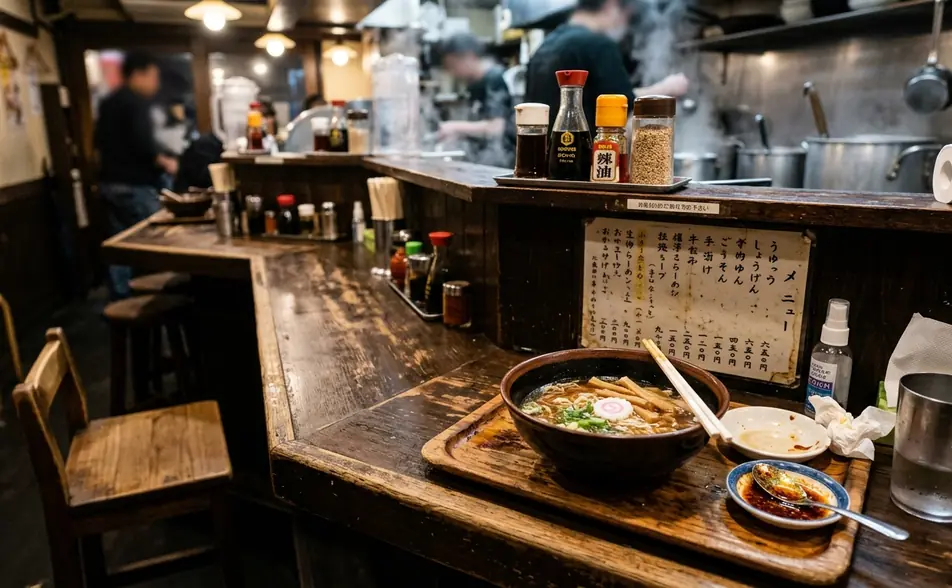
At ramen counters, izakaya-style bars, and cook-facing seats, sit where preparation supplies the activity. Order in compact exchanges and keep bags beneath the stool or on an assigned hook so the neighboring place remains usable.
Neighborhood Casual
Arrive 15–25 minutes after opening, take an early bar seat, read the specials, and make one decisive opening order. Light conversation may develop, though it never needs to become the purpose of the evening.
Fine Dining
Book a counter or a deuce with the same directness you would use for a group reservation. Let staff manage cutlery changes and course timing. Tasting menus often reward focused attention, and long silent intervals may be part of the intended service cadence.
Confirm the booking terms first. Some tasting menus, communal tables, and reservation systems set minimum party sizes or require every guest to take the same menu. Check the solo-booking policy before traveling across town.
The Empty Chair Was Never the Problem
The practical sequence stays compact: reserve or walk in for one, name the preferred seat, arrive at a deliberate point in service, ask decision-oriented questions, order a complete meal, and use one small ritual.
Afterward, record three lines: the strongest dish, one service or seating detail, and what you would order differently next time. Writing them within 5–10 minutes preserves operational details that become vague several days later. Over time, those notes turn solo meals into a personal set of restaurant guides grounded in actual menus and dishes.
Group dining distributes attention across conversation, compromise, and shared ordering. A meal alone gives the kitchen a clearer signal. You notice portion language, course spacing, plate temperature, and whether the menu’s categories help one person assemble a coherent dinner.
Many Japanese ramen shops and cook-facing counter traditions organize service stool by stool: each diner receives an individual bowl, condiments, water access, and a direct view of the preparation area. There, the single stool is the default unit of service.